


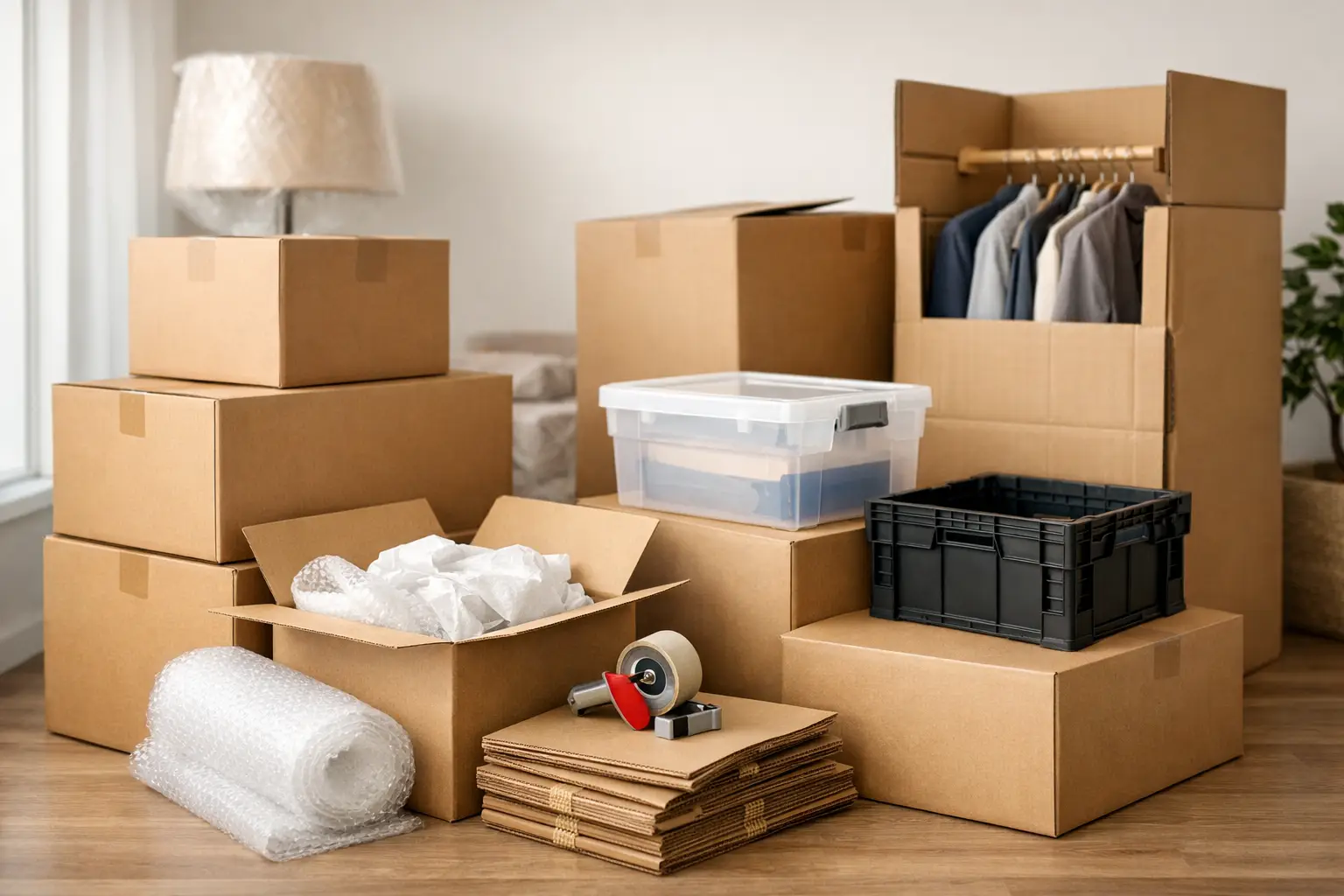
A box that gives way halfway down the driveway can turn a well-planned move into a damaged-item claim, a cleanup job, and a lot of unnecessary stress. The best boxes for moving house are not simply the cheapest ones you can find. They are the right size, strength, and shape for what you need to carry – and they help your belongings arrive safely without making the load harder to handle.
For most households, using a small range of purpose-made moving boxes is far more reliable than collecting a pile of mismatched supermarket cartons. Quality boxes stack properly in the truck, protect items in transit, and give packers and movers safer loads to lift. The result is a quicker, more organized moving day.
What Makes a Moving Box Worth Buying?
A good moving box starts with strong corrugated cardboard. Look for clean, dry cartons with firm corners and no soft spots. Double-walled boxes provide added protection for heavier items and long-distance moves, while standard single-walled cartons can work well for lighter household goods.
Size matters just as much as strength. Oversized boxes look efficient, but they can become too heavy to lift safely when filled with books, tools, cookware, or files. Smaller boxes are better for dense, heavy belongings. Larger boxes should be reserved for light but bulky items such as linens, pillows, lampshades, and soft toys.
Uniform boxes also make a real difference. When cartons have similar dimensions, they stack securely and make better use of space in a moving truck. That reduces shifting during transport and makes unloading easier at the other end.
The Best Boxes for Moving House by Room
There is no single box that suits every item in your home. A practical box order includes a mix of sizes, plus a few specialty cartons for fragile or awkward belongings.
Small boxes for heavy items
Small moving boxes are the workhorses of a household move. Use them for books, canned food, tools, DVDs, small appliances, paperwork, and cookware. Their compact size limits how much weight you can put in each carton, which helps protect both the box and the person lifting it.
Do not be tempted to fill a large carton with books just because there is space. A box that is too heavy is difficult to carry, more likely to split, and harder to place safely in a truck. Keep heavy cartons manageable and label them clearly.
Medium boxes for everyday household goods
Medium cartons are often the most useful option for kitchens, bedrooms, bathrooms, and living areas. They suit crockery when packed carefully, pantry goods, toys, shoes, framed photos, folded clothing, and small decor items.
For breakables, line the base with crumpled packing paper, wrap each item individually, and fill empty gaps so nothing can move. Plates should be packed upright on their edges rather than stacked flat. Mark the box “Fragile” and identify the room it belongs in, but remember that careful packing is still the first line of protection.
Large boxes for light, bulky belongings
Large cartons are useful, but only when used with restraint. Pack bedding, towels, cushions, stuffed animals, lightweight plasticware, and bulky clothing into these boxes. They are not designed for heavy kitchen equipment, books, or stacks of records.
A large box should feel full without becoming difficult to lift. If it is underfilled, add clean packing paper or soft items to prevent the contents from collapsing or shifting when stacked.
Wardrobe boxes for hanging clothes
Wardrobe boxes are one of the most convenient options for family moves. They include a hanging rail, allowing you to transfer clothing directly from the closet into the box. At your new home, clothes can be hung back up quickly without folding, creasing, or mixing them with other belongings.
They are especially helpful for suits, dresses, coats, and delicate garments. Because wardrobe boxes take up more room than standard cartons, they are best used for clothes that genuinely need to stay hanging rather than every item in the closet.
Picture, mirror, and specialty boxes
Artwork, mirrors, televisions, lamps, and other fragile shapes need more than a standard box. Adjustable picture boxes or purpose-made cartons provide a closer fit and reduce the risk of impact damage. Wrap each piece with protective material, reinforce corners, and avoid leaving empty space inside.
For televisions and electronics, the original manufacturer’s carton is ideal if you still have it. If not, use a correctly sized specialty box with internal padding. Take a quick photo of cable connections before disconnecting anything. It makes setting up your home office or entertainment area much easier after the move.
How Many Moving Boxes Do You Need?
The number of boxes depends on the size of your household, how long you have lived there, and how much you are taking with you. A lightly furnished apartment may need only a modest mix of cartons, while a family home with storage areas, a garage, and years of accumulated belongings can require far more than expected.
Rather than buying boxes room by room at the last minute, walk through your home and count what needs packing. Check cupboards, linen closets, sheds, under-bed storage, and the top shelves that are easy to forget. Kitchens and garages usually take more boxes than people anticipate.
It is sensible to order a small buffer rather than running out while packing the final rooms. Unused clean boxes can often be kept for storage, reused for a later delivery, or passed on to someone else who is moving.
New Boxes vs. Used Boxes
Used boxes can save money, particularly for lightweight, non-fragile items. However, not every secondhand carton is suitable for a move. Avoid boxes that are damp, torn, stained, badly creased, or previously used for food. Weak cardboard can fail without warning, and food boxes may attract pests or carry odors.
New moving boxes offer consistency, clean surfaces, and known strength. They are usually the better choice for fragile belongings, electronics, books, and anything that will be stacked for a long trip or stored after the move. For households moving through apartments, steep driveways, or rural access roads around the Hunter Region, reliable cartons are particularly worthwhile because boxes may be handled more often from door to truck.
A mixed approach can work well. Use new, strong cartons for valuables and heavy items, then reserve sound used boxes for cushions, towels, or other lightweight belongings.
Packing Supplies That Matter as Much as the Box
Even the strongest box will not protect an item that is loose inside it. Packing paper, quality tape, permanent markers, labels, and protective wrap all play a part in a safe move. Tape the bottom seam of every box, even if it appears secure, and reinforce heavier cartons with an extra strip across the base.
Avoid using newspaper directly against delicate items where possible, as ink can transfer. Plain packing paper is cleaner and easier to use. Towels and linens can add protection around sturdy items, but they should not replace proper wrapping for glassware, ceramics, or valuable pieces.
Label each carton on at least two sides with the destination room and a brief description of its contents. “Kitchen – everyday plates” is much more helpful than simply writing “Kitchen.” If a box should remain upright, mark it clearly, although fragile labels should support careful packing rather than substitute for it.
Pack for Safe Lifting and Efficient Loading
A well-packed box is full enough to hold its shape but not packed so tightly that the sides bulge. Keep the weight balanced, place heavier goods at the bottom, and use lighter material to fill the top. Once closed, the flaps should lie flat without force.
Do not leave boxes unsealed for movers to guess at. Closed, taped, and labeled cartons are safer to load and easier to stack. Keep essential documents, medications, keys, chargers, and a change of clothes in a separate bag that travels with you instead of in the moving truck.
If packing feels like the biggest part of the job, professional packing support can remove much of the pressure. An experienced local removal team can supply suitable cartons, pack fragile belongings correctly, and load the truck in an order that protects your items and keeps delivery efficient.
The right boxes give your move a calmer start. Choose sturdy cartons that match the items inside, pack them with care, and you will spend far less time worrying about what might be happening inside the truck.