


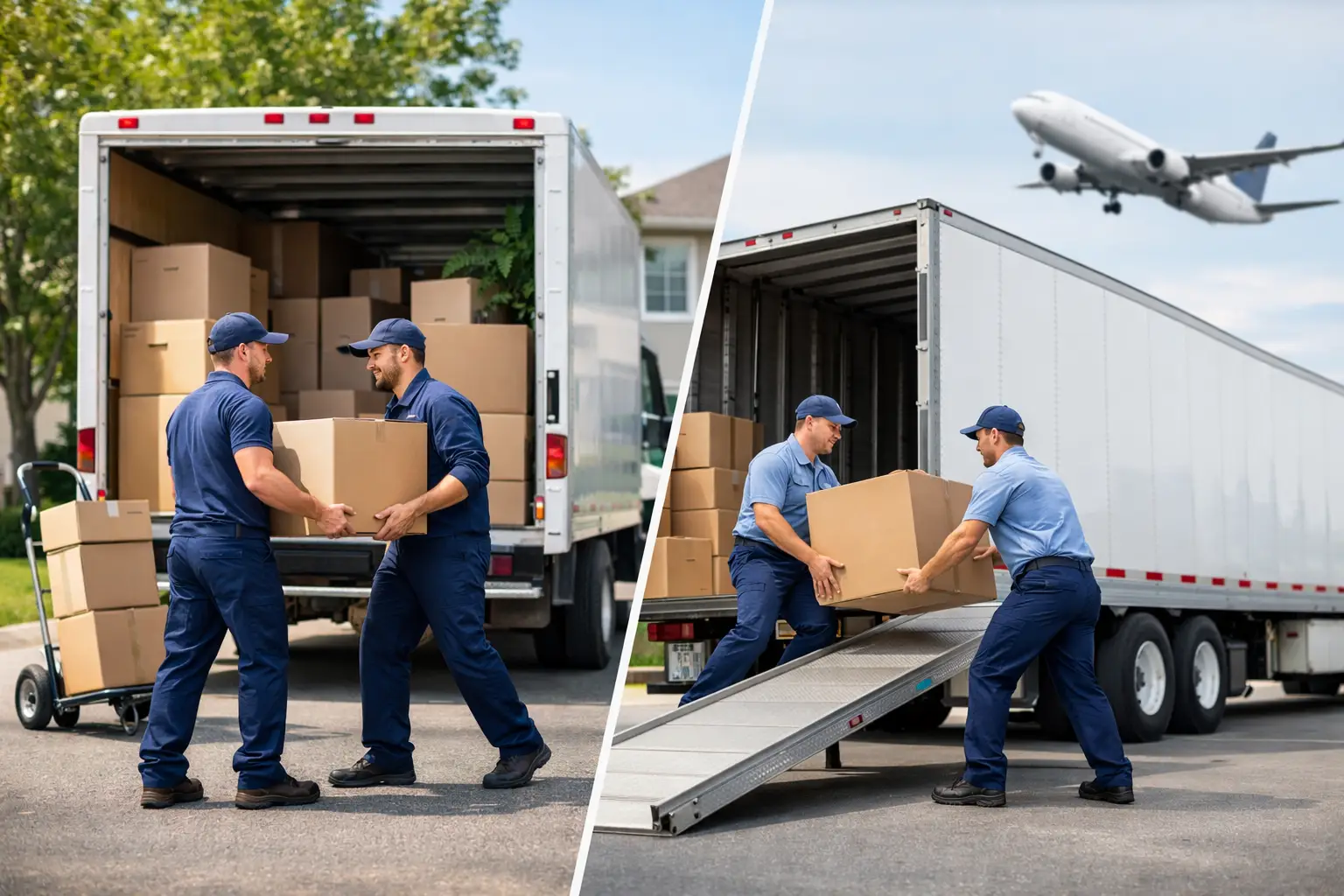
A move can look straightforward on paper until moving day arrives. The truck has to fit the street, the elevator needs to be booked, a heavy sofa has to clear a tight stairwell, and every box needs to arrive where it belongs. When weighing local movers vs national movers, the right choice is less about company size and more about the type of move, the support you need, and who will be accountable for your belongings.
For a move within Newcastle, Lake Macquarie, Maitland, Port Stephens, or the wider Hunter Region, a local team often brings practical advantages that do not appear on a basic quote. For a complex long-distance relocation, a national provider may offer a larger transport network. Understanding the trade-offs helps you book with confidence rather than simply choosing the lowest number.
Local Movers vs National Movers: The Key Difference
Local movers are independently operated or regionally focused moving companies. Their crews work in the same communities they serve, often handling moves within a city, nearby suburbs, and surrounding regional areas. They typically build their reputation through repeat customers, local referrals, and direct accountability.
National movers operate across multiple states or regions, sometimes through franchises, branch offices, or partner carriers. Their scale can suit long-distance moves that require scheduled line-haul transport, storage between locations, or delivery coordination across a broad network.
Neither model is automatically better. A national company may have the reach needed for a cross-country relocation. A local company may provide more responsive planning and a more consistent crew for a move across town or between nearby regions. The question is whether the company’s operating model matches your actual move.
Why Local Knowledge Can Make Moving Day Easier
A local mover does more than know the fastest route. Familiarity with the area can prevent avoidable delays and damage. Crews that regularly work in the Hunter Region understand the practical differences between a city apartment, a waterfront property, a steep driveway, and a rural access road.
That knowledge matters before the truck arrives. A local company is more likely to ask the right questions about loading zones, narrow streets, parking restrictions, stair access, lift bookings, and difficult driveways. These details affect the truck size, crew size, equipment, and time required for the job.
For example, moving from a Newcastle apartment may require coordinating a loading area and building access window. A home in Lake Macquarie may have a sloped entry that calls for careful truck placement. A regional property may need a vehicle that can safely access unsealed or narrow roads. Good planning is not an add-on. It is how a moving team protects your schedule and your belongings.
Local companies can also be easier to reach when plans change. Settlement dates move, keys are delayed, or a property manager changes the elevator time. With a nearby office and local dispatch, communication can be more direct than working through a centralized call center.
Where National Movers Can Be the Better Choice
National movers can be a sensible option for a genuine long-distance relocation, particularly when the pickup and delivery locations are far apart. Their larger networks may provide regular transport routes, coordinated storage options, and established systems for tracking shipments over multiple legs.
This can be useful if your household goods are traveling a significant distance and you are comfortable with a broader delivery window. National providers may also be well positioned to manage relocations involving several cities, large corporate moves, or specialized freight arrangements.
However, size does not always mean the same crew handles every stage. Some national companies use local agents or contracted partners for pickup and delivery. That is not necessarily a problem, but it is worth asking who will load your belongings, who will transport them, and who will be responsible if an issue arises. Clear answers matter more than a familiar brand name.
A national mover may also be less flexible for smaller regional moves. If their systems are designed around fixed schedules and high-volume routes, a short-notice change or a specific time request may be harder to accommodate. Ask whether your booking is a dedicated move or part of a shared load, as this can affect timing and handling.
Compare Quotes Beyond the Bottom Line
Moving quotes are only useful when they describe the same level of service. A lower quote can become expensive if it excludes the labor, protection, access time, or equipment your move actually requires. Whether you choose local or national movers, request a clear written scope of work.
Look closely at whether the quote includes packing materials, furniture wrapping, disassembly and reassembly, stairs, long carries, heavy items, and waiting time. If you are moving from or into an apartment, ask how elevator delays and parking restrictions are handled. For long-distance moves, confirm whether the delivery date is guaranteed or estimated.
You should also understand how pricing is calculated. Local moves are often quoted by the hour, by the job, or by a combination of estimated labor and travel. Long-distance moves may be priced by volume, weight, route, or allocated truck space. Each approach can be fair, provided the company explains it clearly and there are no hidden fees.
A reliable mover will not rush past the details simply to give the cheapest figure. They will ask about access, inventory, fragile items, and the services you want. That conversation is a sign of preparation, not unnecessary upselling.
Care, Insurance, and Accountability
Every moving company should have trained staff, appropriate equipment, and clear procedures for handling damage or loss. Still, it is wise to ask direct questions before booking. Confirm the company’s insurance arrangements, what coverage applies to your belongings, and how claims are managed.
The language around insurance can be confusing. Some movers include limited liability terms, while others offer additional valuation or protection options. Ask for the details in writing and take photographs of valuable or delicate items before the move. If you have antiques, artwork, large appliances, or unusually heavy furniture, make sure they are identified during the quoting process.
Accountability can feel more personal with a local company because the people quoting, scheduling, and completing the move may be part of the same team. That does not make every local mover equal, and it does not mean a national provider cannot provide excellent service. It does mean you should know exactly who your point of contact is and how problems will be resolved.
For sensitive work such as a deceased estate clearance, direct accountability is especially valuable. Families and executors need a team that can work respectfully, follow instructions carefully, and communicate without creating additional stress. The best provider is one that treats the work as more than a transport job.
The Right Choice for Homes and Businesses
For most local household moves, a regional moving company offers a strong combination of local planning, flexible scheduling, and direct service. This is particularly true when access is difficult, the move has a tight timeline, or you would like help with packing, unpacking, and furniture setup.
Businesses should make the decision based on continuity as well as distance. An office relocation often involves workstations, IT equipment, documents, and a limited shutdown window. A local team that can inspect the site, plan the access, and work around business hours may reduce disruption significantly. For a multi-location move over a much larger distance, a national provider’s network could be more practical.
Before you decide, ask each mover the same practical questions: Who will be on the crew? What is included in the quote? How will access challenges be managed? What protection is used for furniture and fragile items? What happens if the schedule changes? The quality of the answers will tell you far more than the size of the logo on the truck.
A good move starts with a company that listens carefully to the details of your property, your timeline, and your priorities. Whether your destination is around the corner or much farther away, choose the team that gives you clear communication, careful handling, and a plan you can trust.