


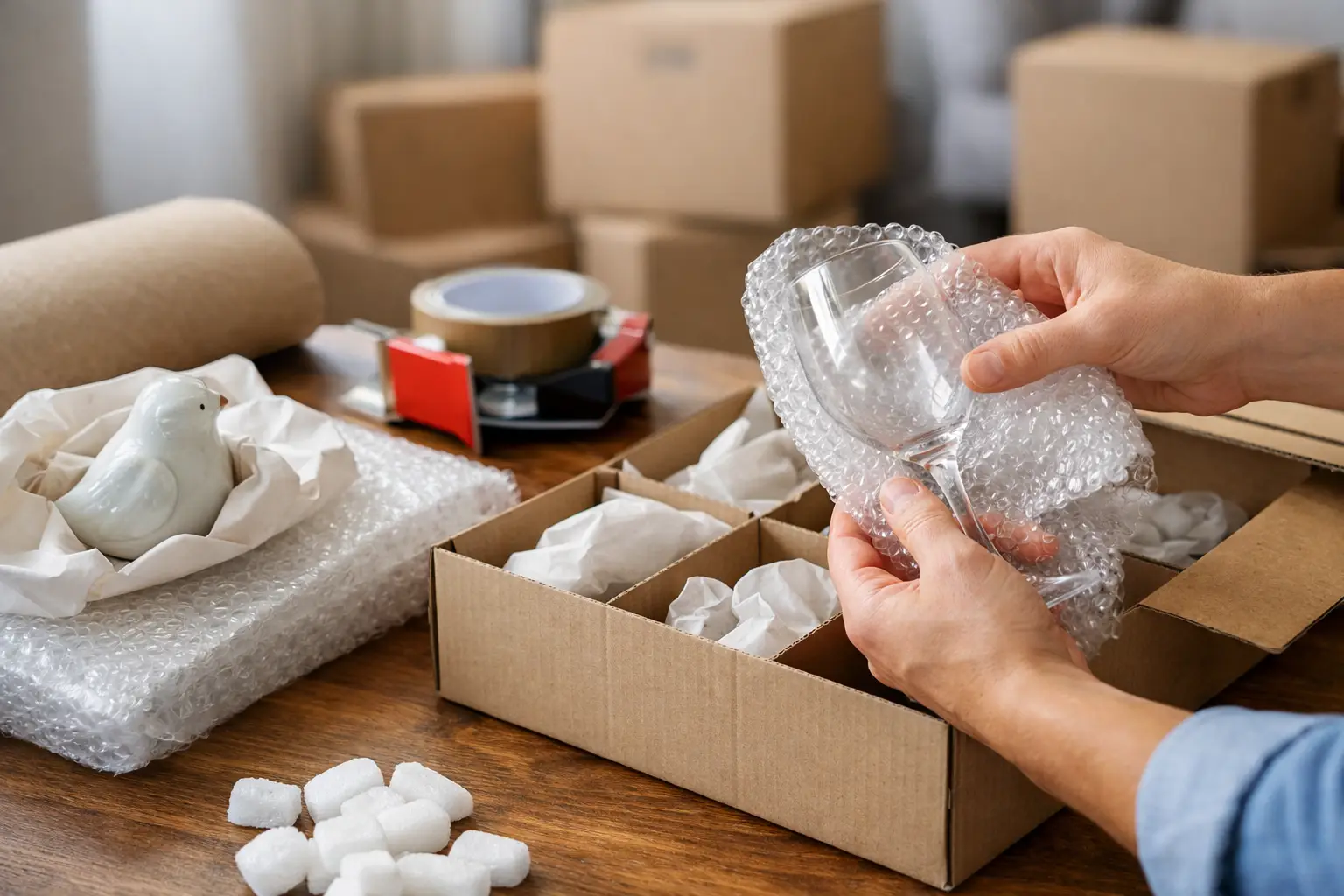
A chipped dinner plate or broken picture frame can turn an otherwise successful move into a frustrating one. Knowing how to pack fragile items properly is less about using excessive packing material and more about creating layers of protection that stop belongings from shifting, rubbing, or taking a direct impact in transit.
Glassware, ceramics, mirrors, electronics, artwork, and sentimental items all need a slightly different approach. The goal is the same: each item should be protected inside its box, the box should be strong enough for its contents, and the load should be secured so nothing can move around on the truck.
Start With the Right Packing Materials
Fragile belongings are only as safe as the materials around them. Thin grocery boxes, worn cartons, and loosely packed newspaper leave too much room for movement. Before you start, gather quality moving boxes in a few useful sizes, packing paper, bubble wrap, strong tape, markers, and a box cutter.
Small boxes are usually the best choice for heavy breakable items such as books, plates, glassware, and small decorative pieces. They are easier to lift safely and less likely to collapse under their own weight. Larger boxes work better for lightweight but awkward items, including lampshades, cushions, and framed artwork when packed with the right protection.
You do not need to wrap every item in costly bubble wrap. Clean packing paper is excellent for everyday kitchenware because it cushions items without leaving ink marks. Reserve bubble wrap for delicate glass, heirlooms, electronics, and pieces with corners or raised details that could chip.
How to Pack Fragile Items Without Empty Space
The most common reason fragile items break is not a lack of wrapping. It is empty space inside the carton. Even a well-wrapped vase can crack if it slides into the side of a box when the truck brakes or turns.
Begin every box with a soft base. Crumpled packing paper, a folded towel, or a layer of bubble wrap helps absorb impact from underneath. Wrap each item individually, then place it in the box with the heaviest pieces at the bottom and lighter pieces on top. Fill every gap with crumpled paper until the contents are snug.
A simple test helps: gently close the box and give it a small shake. If you can hear or feel anything moving, add more filler. The contents should feel secure without being forced tightly against one another.
Avoid overfilling boxes, too. A carton that bulges at the sides or will not close flat is more likely to split. Leave enough room at the top for a final cushioning layer before sealing it with strong tape.
Pack Plates, Bowls, and Glassware Vertically
Plates and bowls are stronger when packed on their edge rather than stacked flat. Wrap each piece in packing paper, place a layer of cushioning at the bottom of a small, sturdy carton, and stand the plates vertically like records in a crate. Add cardboard dividers or extra paper between groups if needed.
For glasses, mugs, and stemware, stuff the hollow center with paper first. Then wrap the entire piece, giving extra attention to handles, stems, and rims. Glasses should sit upright in the box, ideally in a divided carton. If you do not have dividers, use rolled paper to create firm partitions so pieces cannot touch.
Do not pack a few heavy plates in the same box as delicate wine glasses. Similar items can often travel together, but mixing weights increases the chance that something heavier will shift onto something more delicate.
Protect Mirrors, Frames, and Artwork
Flat items are vulnerable at their corners and edges. Use cardboard corner protectors or create your own from folded cardboard, then wrap the item in bubble wrap or a moving blanket. For glass-fronted frames and mirrors, apply painter’s tape in a large X across the glass before wrapping. This does not prevent breakage, but it can help keep shards contained if damage occurs.
Never place a mirror or framed artwork flat on the floor of the truck with other items stacked on top. These pieces should travel upright, secured between mattresses, padded furniture, or purpose-made picture cartons. Keep them away from sharp-edged furniture and avoid loading them where they can fall sideways during transit.
For valuable artwork, antiques, or unusually large mirrors, professional packing is often the safer choice. The cost of specialized materials and careful handling can be modest compared with replacing an irreplaceable item.
Give Electronics More Than One Layer of Protection
Original manufacturer boxes are ideal for televisions, computers, monitors, and audio equipment because they are designed to support the item in transit. If those boxes are gone, use a correctly sized double-wall carton and protect screens with a foam sheet, blanket, or several layers of bubble wrap.
Remove cables, stands, and detachable accessories where possible. Place cables in labeled bags and pack them with the relevant device, rather than in a separate mystery box. Take a quick photo of cable connections before disassembling a desk setup or entertainment system. It can save time when you are settling in.
Keep electronics dry, upright, and away from loose tools or hardware. A television should never be laid face-down or used as a space filler in the truck. When moving an office, label equipment by workstation or department so the setup at the new location is organized and downtime is kept to a minimum.
Label Boxes for Careful Handling
“Fragile” is useful, but it is not enough on its own. Clear labels help movers understand how the box should be handled and where it belongs at the destination. Write on at least two sides of each carton, not just the top.
Include the room, a brief description of the contents, and handling instructions such as “This Side Up” when relevant. For example, “Kitchen – wine glasses – fragile – keep upright” gives much clearer guidance than simply writing “Kitchen.”
It is also helpful to identify boxes you want to unload first. A clearly marked essentials box with everyday dishes, medications, chargers, and a few basic household items means you will not need to search through packed cartons on your first night.
Seal and Load Boxes Correctly
Use the H-tape method on the bottom and top of every box: run one strip along the center seam and one strip across each edge seam. This reinforces the carton and reduces the risk of the bottom opening when it is lifted.
When loading, fragile cartons should be placed on a flat, stable surface rather than balanced on soft furniture or wedged into an unstable gap. Heavy boxes go low, lighter fragile boxes go higher, and nothing should be stacked on cartons marked fragile. Moving blankets, straps, and careful load planning all help prevent shifting on the road.
This matters even more when access involves apartment elevators, steep driveways, waterfront properties, or longer regional routes. A box may be carried several times before it reaches the truck, so it needs to be packed and sealed for the full journey, not just the trip down the hallway.
Know When Professional Packing Makes Sense
Packing fragile items yourself can be practical when you have time, suitable materials, and a manageable amount to move. However, professional packing is worth considering when you have a large kitchen, valuable collections, antiques, a busy family schedule, or an office full of sensitive equipment.
A trained crew knows how to build stable cartons, protect furniture around delicate items, and load the truck in an order that minimizes risk. For homeowners and businesses across Newcastle and the Hunter Region, Atlantis Removals can provide packing support alongside a carefully planned move, helping reduce the pressure in the days before moving day.
The best packing job is the one that lets you open each box at your new home with everything intact. Take the extra few minutes to wrap, cushion, label, and secure each fragile item now, and your belongings will have the protection they need when the move gets underway.