


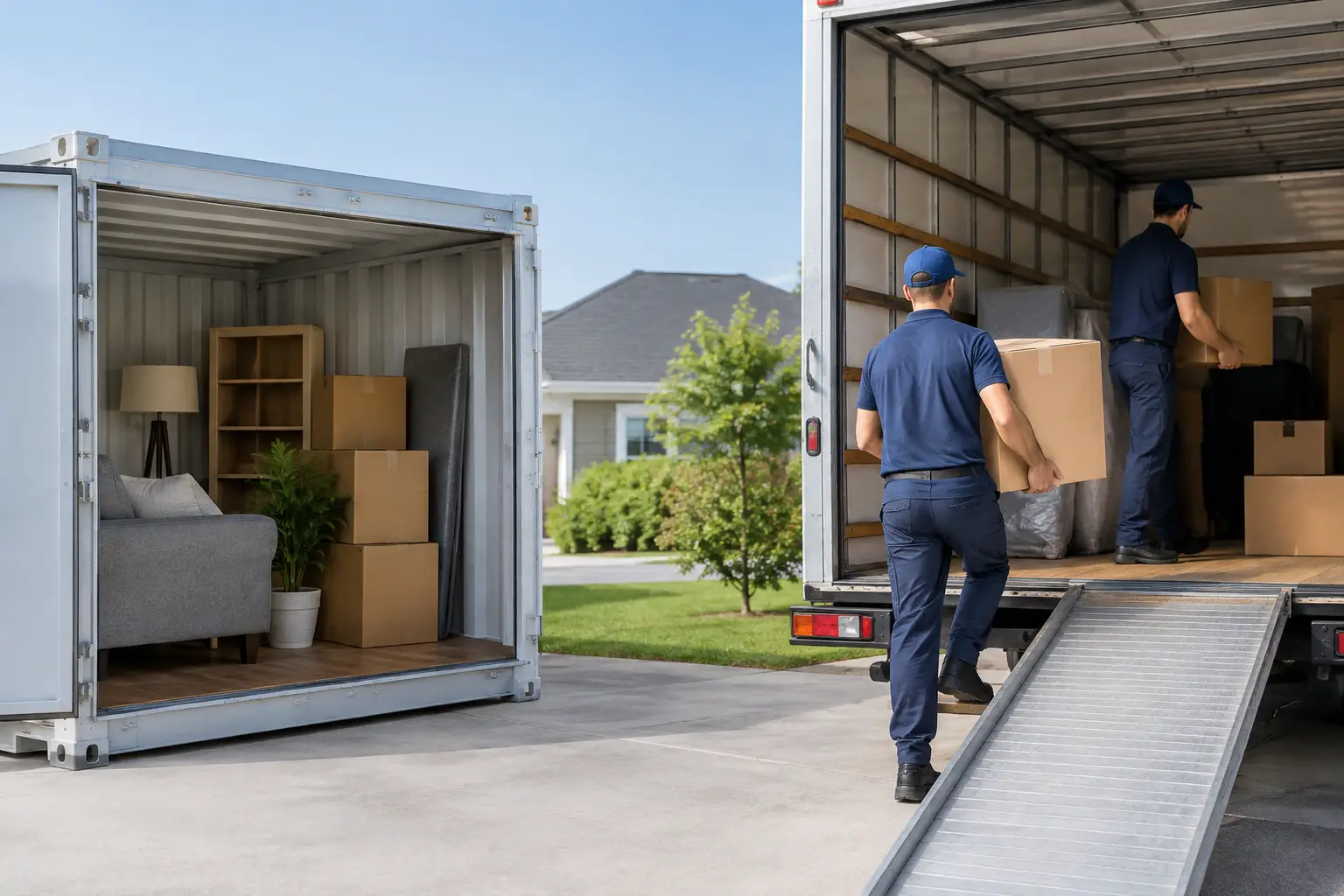
A moving pod parked outside can look like the easy answer: load it when you have time, close the door, and let someone else transport it. But moving pods versus removalists is not simply a question of which option has the lower starting price. The better choice depends on how much work you can safely do yourself, where you are moving from and to, and how much certainty you need on moving day.
For a small, flexible move with straightforward access, a pod can be useful. For a family home, a tight apartment building, a steep driveway, or a move involving large furniture, a professional removalist crew often prevents the cost and stress from shifting back onto you.
How Moving Pods and Removalists Work
A moving pod is a portable storage container delivered to your property. You pack it yourself, usually over several days, then the provider collects and transports it to your new address or stores it until you are ready. This can suit people who need time between homes or prefer to pack at their own pace.
A removalist service uses a trained crew and a moving truck. The team loads, secures, transports, and unloads your belongings within an agreed schedule. Depending on the service you choose, they can also provide packing materials, pack fragile items, dismantle and reassemble furniture, and unpack at the destination.
The difference is responsibility. With a pod, you manage most of the physical work, packing method, load balance, and access planning. With removalists, a professional team manages the lifting and transport process, while you retain control over what goes, where it goes, and the timing that works for your household or business.
Moving Pods Versus Removalists: The Real Cost Difference
The advertised price of a pod may seem lower because it does not include a crew. That can be a genuine saving if you have a small load, capable help, plenty of time, and easy ground-level access. It is worth looking beyond the delivery fee, though.
Pod costs can increase with container size, delivery zones, transport distance, storage time, redelivery, and the length of your rental. You may also need to buy boxes, protective materials, moving blankets, a trolley, tie-downs, and other equipment. If friends or family are helping, there is also the practical cost of coordinating their availability around delivery and collection windows.
A removalist quote generally reflects the crew, truck, equipment, loading, travel, and unloading. While the upfront figure may be higher, it gives you a clearer picture of what is included. Ask whether the quote covers stairs, long carries, difficult access, furniture disassembly, packing, and any additional travel time. Transparent pricing matters more than a low estimate that changes once the move is underway.
For many households, the most useful comparison is not pod rental versus truck hire. It is pod rental plus your time, supplies, physical effort, and risk versus a fully managed move with an experienced crew.
Time, Effort, and Physical Safety
Packing a pod is harder than it first appears. Heavy items need to be distributed carefully, furniture needs protection, and empty spaces must be filled so belongings do not shift during transport. A poorly loaded container can leave furniture damaged or create a difficult and unsafe unload at the other end.
Then there is the lifting. Mattresses, sofas, washing machines, refrigerators, solid timber tables, and packed book boxes are awkward even for strong people. Carrying them down narrow stairs or across uneven paths adds another layer of risk. One strained back, damaged wall, or dropped appliance can quickly outweigh the expected savings.
Professional removalists handle these tasks every day. They know how to use dollies, ramps, straps, blankets, and proper lifting techniques. They also know how to protect doorways, floors, and furniture while working efficiently. That experience is particularly valuable when a move has to be completed in one day rather than stretched across multiple weekends.
Access Can Decide the Whole Move
Before booking a pod, confirm that it can legally and safely sit at both properties. You need enough level space for delivery, clearance for the truck, and a suitable place for the container while you load it. Some streets, complexes, strata-managed buildings, and rental properties have restrictions on parking or temporary containers. A pod may require permits or approval from a building manager.
Access challenges are common across the Newcastle and Hunter Region. Waterfront homes, sloping blocks, long rural driveways, older streets, and apartment complexes can all make container delivery difficult. Even when a pod can be dropped nearby, carrying every item a long distance to the container may not be realistic.
Removalist crews can often adapt more easily. A truck may be able to park in a workable location, and a team can manage stairs, elevators, narrow hallways, and longer carries. That does not mean access issues should be ignored. Sharing photos, parking details, and any known obstacles before the move helps the crew plan properly and avoids delays.
When Storage Is Part of the Plan
Pods have a clear advantage when you need temporary storage. If settlement dates do not line up, renovations are underway, or you are relocating in stages, having your belongings packed into one container can feel convenient. You avoid unloading into a separate storage unit and loading again later.
The trade-off is access. Once the pod has been collected and placed in storage, you may not be able to retrieve a single item whenever you want. Ask where it will be stored, what notice is required for access, and whether retrieval or redelivery fees apply. Consider weather exposure while the pod is at your property as well, particularly if rain is forecast.
A removalist can also work with a storage plan. The crew can load directly into a storage facility, transport selected items to a temporary address, or complete the final delivery when your new property is available. This approach can be more flexible when you need access to certain belongings during the transition.
Protection, Accountability, and Peace of Mind
When you pack a pod yourself, the provider may have limited responsibility for damage caused by inadequate packing or loading. Their coverage and terms may also differ for owner-packed containers, so read them carefully before deciding. Taking photos and using quality materials is sensible, but it does not replace secure loading.
With an insured professional crew, there is clear accountability for the work they perform. Experienced removalists use protective wrapping and secure items in the truck to reduce movement in transit. They can also identify fragile, oversized, or difficult items before moving day and plan the right handling method.
This matters when you are moving more than replaceable possessions. Family heirlooms, artwork, office equipment, antiques, and sentimental belongings deserve a careful approach. For a deceased estate clearance or move, professional help can be especially reassuring. It allows the family or executor to focus on decisions that require their attention instead of the physical task of clearing and transporting every item.
Which Option Fits Your Move?
A moving pod may be the right fit if your move is small, you have several days to load and unload, both properties have easy container access, and you are comfortable doing the physical work. It can also be practical when secure short-term storage is your main need.
A removalist is usually the stronger choice when the move involves a full home, valuable or heavy furniture, stairs, tight access, a fixed deadline, or limited help. It is also well suited to office relocations, where minimizing downtime and handling desks, workstations, files, and equipment in an organized way is often more valuable than saving on labor.
There is a middle ground, too. You can pack your own boxes to control costs, then book a crew for the heavy lifting, transport, and furniture handling. This gives you hands-on control without asking friends or family to manage the hardest part of the move.
The best move is the one that leaves your belongings protected, your schedule intact, and your household ready to settle in. Before committing, walk through the access at both addresses, count the large items, and be honest about the time and help you have available. A clear quote from a local professional removalist can make that decision far easier.