


A washing machine can turn a well-planned moving day into a stressful one if water connections are left until the last minute. So, can movers disconnect washing machines? Often, yes, but the answer depends on the moving company’s service scope, the appliance setup, and whether the job involves basic hose removal or plumbing work that requires a licensed professional.
A professional removal crew can safely move a washing machine once it is drained, disconnected, and prepared for transport. Some crews also offer appliance disconnection as an add-on service. Never assume it is included in a standard move, though. Confirm the details when booking so there is no delay on moving day.
When Movers Can Disconnect a Washing Machine
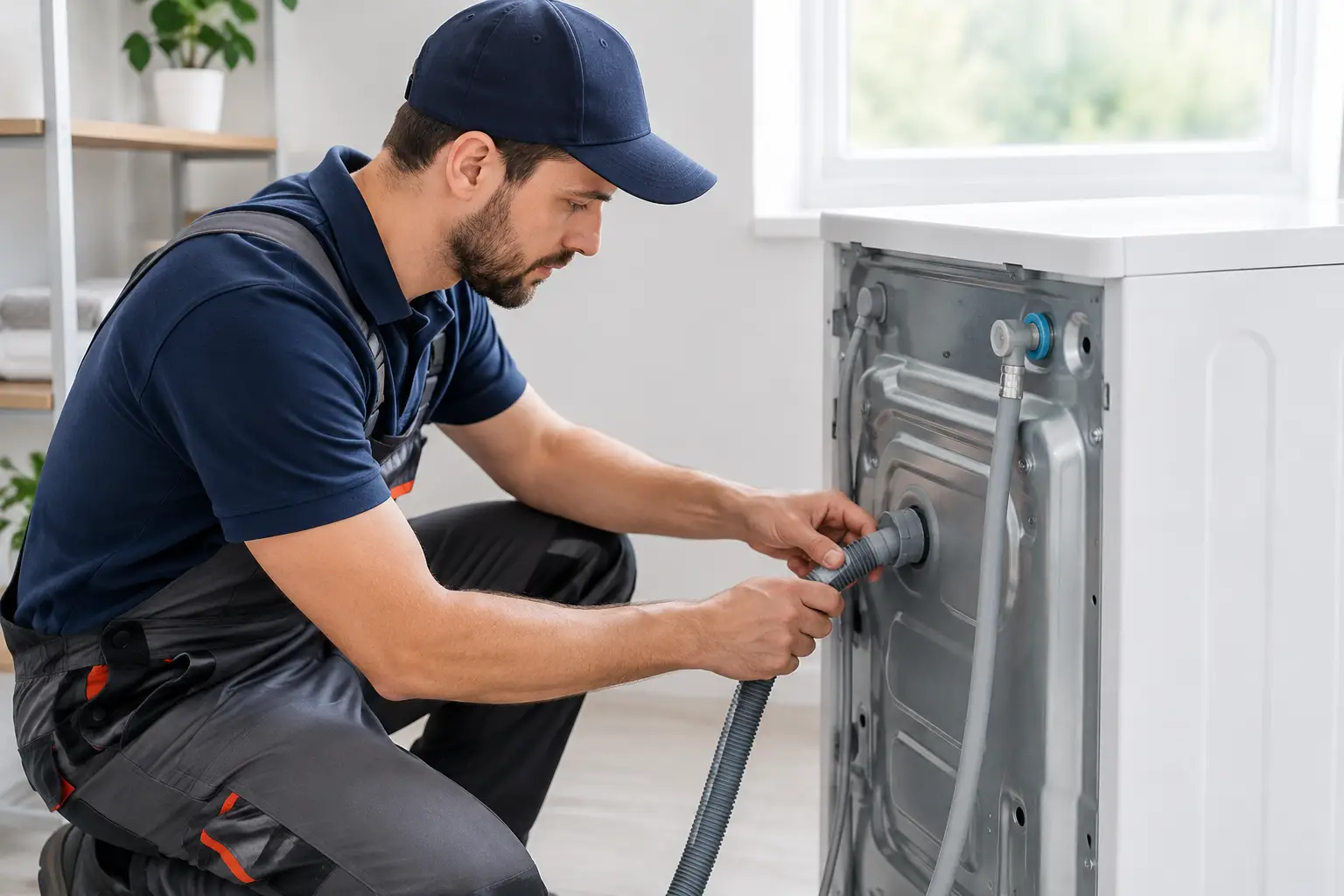
For a typical washing machine, disconnection is straightforward. The machine is switched off at the wall, the hot and cold water valves are turned off, the inlet hoses are removed, and the drain hose is released from the standpipe or sink connection. The remaining water is drained before the appliance is secured for transport.
Many movers can handle this type of basic disconnection when it has been agreed in advance. It is particularly useful for households moving from apartments, townhouses, or homes where managing heavy appliances alone is not practical. A crew that knows the plan can bring the right equipment, protect floors and doorways, and load the machine in an upright position.
The key distinction is between disconnecting flexible appliance hoses and altering fixed plumbing. If a connection is corroded, leaking, inaccessible, permanently fitted, or requires changes to pipes, valves, or drainage, that work is better left to a licensed plumber. The same applies if the water shutoff valve does not operate properly.
Why Advance Notice Matters
A washing machine is not simply another box to load. It is heavy, awkward, and can leak if it has not been drained properly. It may also have transport bolts, depending on the model, that need to be fitted to protect the drum during travel.
Tell your mover about the appliance during the quote process. Mention whether it is a front-loader or top-loader, whether there are stairs, narrow hallways, or a steep driveway, and whether you want help with disconnection and reconnection. This lets the crew allow the right time and confirm what is included in your booking.
When You Should Book a Plumber Instead
There are situations where a mover should not be asked to disconnect the machine. If the job goes beyond a simple hose connection, it can create a water-damage risk and may fall outside the mover’s insurance or service policy.
Book a plumber if you find a seized tap, brittle hose, visible corrosion, a leaking connection, damaged valves, or a drain setup that needs changing. You should also use a qualified professional when relocating a laundry and installing new pipework, changing water supply points, or connecting a machine where no suitable hookups already exist.
Newer homes can still present complications. Some laundry cabinets conceal valves and drainage points, while stacked washer-dryer arrangements may need careful disassembly. In older properties, fittings may be fragile even if they appear to be working. Forcing a stubborn connection to save time can result in a costly leak after the truck has left.
A plumber can also assess whether existing hoses should be replaced. Washing machine hoses have a working life, and moving is a sensible time to replace worn or bulging lines rather than reconnect them and hope for the best.
How to Prepare Your Washing Machine Before Moving Day
Whether your movers disconnect the appliance or you arrange a plumber, preparation makes the job safer and faster. Aim to stop using the machine at least a day before the move. Run a final short cycle without laundry, then allow time for internal water to drain.
Before the crew arrives, complete these practical steps:
- Empty the drum, detergent drawer, lint filter, and any small compartments.
- Turn off the water supply valves and unplug the power cord.
- Keep towels and a shallow tray nearby for water left in the hoses.
- Drain the machine according to the manufacturer’s instructions, including the lower drain filter if your model has one.
- Locate the transport bolts and reinstall them on front-loading machines if required by the manufacturer.
Transport bolts matter because they hold the internal drum steady. Moving a front-loader without them can damage the suspension system, even if the appliance looks fine from the outside. If the original bolts are missing, check the manufacturer’s guidance before the move. Do not improvise with screws or packing material inside the drum.
Once disconnected, secure the inlet and drain hoses so they cannot drag or scratch surfaces. Tape the power cord to the back of the appliance with low-residue tape, and keep the drain tray, bolts, manuals, and hose fittings in a labeled bag. Put that bag somewhere easy to find at the new home rather than packing it into a random moving carton.
Do Not Lay It Flat Unless the Manufacturer Allows It
Most washing machines should travel upright. Laying one on its side can shift internal components, place pressure on the drum, and allow trapped water to reach areas where it should not be. A professional crew will use an appliance dolly, moving blankets, and straps to keep the machine protected and stable in the truck.
If access makes an upright move impossible, ask the moving company for advice before moving day and check the appliance manual. The machine may need time to stand upright before it is connected and switched on at the destination.
Reconnecting the Washer at Your New Home
Disconnection and reconnection are not always the same service. A mover may be able to place the washing machine in the laundry and remove transport protection, while a plumber or appliance technician handles the final connections. Ask about both ends of the move when arranging your booking.
Before reconnecting, inspect the new laundry space. Confirm that the water valves work, the drain is suitable, the electrical outlet is accessible, and the machine will sit level. A washer that is not level can vibrate heavily, move across the floor, and wear components prematurely.
After the hoses are connected, run a short rinse cycle while watching for leaks. Check the taps, hose fittings, drain hose, and floor around the machine. It is far easier to correct a drip immediately than to discover water damage after unpacking has begun.
If you are moving into an apartment or a property with shared access, check whether building management has rules about elevator bookings, parking, and appliance delivery times. Planning these details early protects your moving schedule and reduces pressure on the day.
What to Ask Before You Book Movers
The most useful question is not simply whether movers can disconnect washing machines. Ask exactly what their appliance service includes. Confirm whether the crew will turn off and remove hoses, drain the machine, reinstall transport bolts, carry the appliance, and reconnect it at the new property. Also ask what happens if a fitting is stuck or a leak is discovered.
At Atlantis Removals, clear communication before moving day helps the crew plan for heavy appliances, access challenges, and the level of help you need. For homes across Newcastle and the Hunter Region, that local planning can be especially valuable where tight staircases, waterfront access, or rural driveways affect how an appliance is moved.
A washing machine should never be an afterthought on your moving checklist. Confirm the service, prepare the appliance early, and bring in a plumber when the connection is anything more than a simple, sound hose fitting. That small amount of planning keeps your move moving and helps your laundry be ready when you are.