


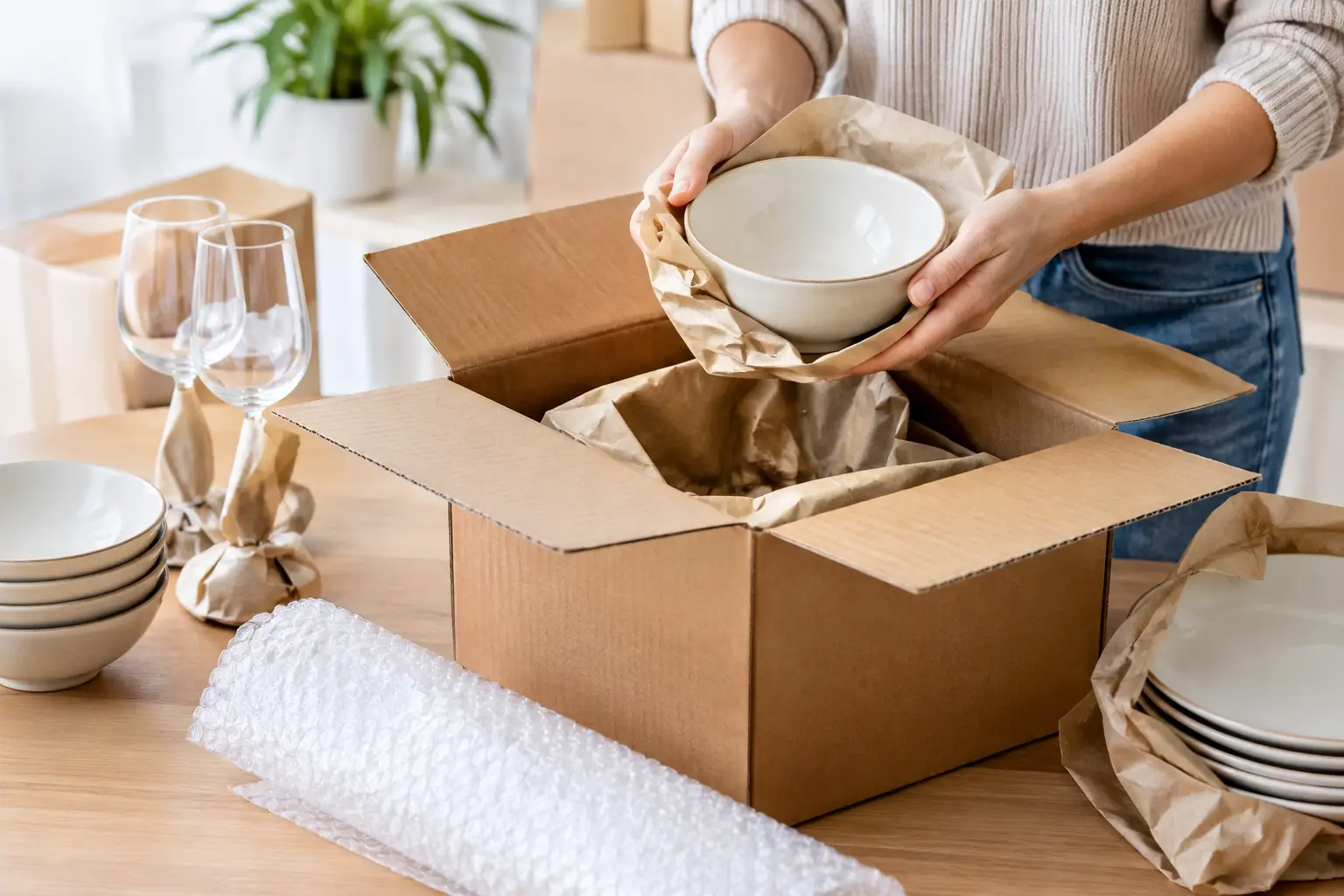
A kitchen can look manageable until you open the cabinets. Then there are wine glasses from a wedding, everyday plates, heavy Dutch ovens, sharp knives, and the appliance you use every morning. Packing fragile kitchen items properly is one of the best ways to avoid opening a moving box to a collection of chips, cracks, and broken glass.
The good news is that breakage is rarely inevitable. Most damage happens when boxes are overfilled, poorly supported, or packed with empty space that lets items shift in transit. A careful system takes a little longer at the start, but it saves money, stress, and cleanup at the other end.
Start With the Right Supplies
Thin grocery boxes and old cartons are not a good match for heavy dishes or glassware. Use clean, sturdy moving boxes that close securely, along with packing paper, strong tape, markers, and cushioning material. Small or medium boxes are generally safer for kitchenware because they prevent a box of plates or cookware from becoming too heavy to lift safely.
You will also need a designated packing surface. Clear a section of the counter or dining table so you can wrap items consistently rather than rushing through the job in a crowded kitchen. Keep tape, paper, and boxes within reach. This simple setup reduces the temptation to cut corners halfway through.
For a typical kitchen, the most useful materials are:
- Small and medium double-walled boxes for dishes, glassware, and cookware
- Plain packing paper for wrapping and filling gaps
- Bubble wrap for especially delicate, sentimental, or unusually shaped pieces
- Dish pack boxes or cardboard dividers for stemware and fine glassware
- Heavy-duty packing tape and a clear marker for labeling
Newspaper can work in a pinch, but the ink can transfer to light-colored ceramics, glass, and linens. Plain packing paper is cleaner and easier to handle when unpacking.
Packing Fragile Kitchen Items by Weight and Shape
A reliable rule is simple: heavy items go low, lighter items go high, and every item needs support on all sides. Begin each box with a generous layer of crumpled packing paper across the bottom. This creates a cushion that absorbs vibration from loading, road conditions, and normal handling.
Wrap plates individually, then place them upright on their edges rather than stacking them flat. Plates are stronger when packed vertically, much like records in a crate. Group similar sizes together where possible, but do not force oversized plates into a box that is too small. Add a layer of crumpled paper between rows and around the outside edges of the box.
Bowls can be wrapped individually and nested in sets of two or three, with packing paper between each piece. For large serving bowls, use extra paper around rims and handles, as these are the areas most likely to crack. Ceramic platters and baking dishes should also be wrapped separately and placed upright with cushioning on both sides.
Once a box is about three-quarters full, test for movement by gently pressing around the contents. Fill every open space with crumpled paper. A properly packed box should feel full but not strained. If the sides are bulging or the lid will not sit flat, move a few items to another box.
Protect Glassware, Stemware, and Mugs
Glasses need more than a quick wrap around the outside. Start by placing a sheet of paper inside each glass, then roll the glass diagonally in another sheet. Tuck the paper around the base and rim so the entire piece is protected. The rim is particularly vulnerable, so avoid letting glasses touch one another inside the box.
For wine glasses, champagne flutes, and other stemware, wrap the stem first with a narrow strip of paper before wrapping the bowl. This prevents the stem from bending or knocking against other items. Cardboard cell dividers provide useful separation, particularly for a large collection, but each glass should still be wrapped before it goes into a compartment.
Mugs should be wrapped one at a time with extra protection around the handle. Never pack mugs by hooking handles together. It may save a little space, but it puts direct pressure on the weakest part of each mug.
Pack glassware in smaller boxes and keep the total weight comfortable. A box marked “fragile” still needs to be manageable for the person carrying it. A lighter, well-packed box is far safer than a large box full of glassware that is difficult to control on stairs or through a narrow doorway.
Cookware Needs a Different Approach
Pots, pans, and baking trays are not always fragile, but they can damage more delicate items if packed carelessly. Wrap lids separately, especially glass lids, and place them on edge with padding around the rim. Nest pots and bowls with paper between each surface to prevent scratches.
Cast iron, heavy serving dishes, and appliances should go in small boxes. Even if the item itself is tough, its weight can crush glassware, dent cabinet hardware, or cause the bottom of a weak carton to fail. Use plenty of cushioning underneath heavy cookware, tape the bottom seams of the box well, and do not make it too heavy to lift.
For small appliances, remove detachable parts and wrap them separately. Secure cords loosely so they do not scratch the appliance or catch on other items. If you still have the original box with fitted inserts, it is often the best option for a coffee machine, mixer, blender, or food processor.
Avoid the Packing Mistakes That Cause Breakage
The most common mistake is leaving empty space. During a move, boxes are lifted, turned, stacked, and transported over changing road surfaces. Even a carefully wrapped plate can break if it has room to slide into another hard object. Fill gaps with paper until nothing shifts when you gently move the closed box.
Another problem is mixing too many item types in one carton. A heavy frying pan placed beside a stack of glasses is an avoidable risk. Keep boxes organized by category and weight, even if that means using an extra carton. It makes loading safer and unpacking easier as well.
Do not rely on labels alone. Marking a box “fragile” helps communicate care, but the packing inside must do the real work. Clearly label the top and sides with the room name, a brief description such as “glassware” or “plates,” and an indication of which way should face up. If a box contains essential kitchen items for your first night, mark it clearly so it does not disappear into a garage or storage room.
Plan the Kitchen in Stages
Start with items you use least often, such as specialty serving ware, seasonal baking supplies, extra glasses, and display pieces. Leave daily dishes, a saucepan, basic utensils, and a few cups until the final day or two. This allows your household to function without reopening already packed boxes.
Set aside a small first-night kitchen box with the basics: a kettle or coffee maker, mugs, plates, cutlery, a pan, a dish towel, dish soap, and any essential medication or baby-feeding equipment. This is particularly helpful after a long move, when unpacking a full kitchen is not the first priority.
If you are moving from an apartment with limited elevator access, a waterfront property with stairs, or a home with a steep driveway, pack kitchen boxes even more conservatively. Access conditions affect how boxes are carried and loaded. Smaller, balanced cartons reduce the chance of strain and accidental knocks.
When Professional Packing Is Worth Considering
Professional packing can be a practical choice when time is short, there is a large amount of fine china or glassware, or you are managing a move alongside work and family responsibilities. It can also help when a kitchen includes sentimental items that cannot easily be replaced.
An experienced packing crew uses appropriate cartons, wrapping methods, and loading practices rather than treating every item the same. For households moving across Newcastle, Lake Macquarie, Maitland, Port Stephens, or the wider Hunter Region, Atlantis Removals can provide packing support alongside the move, with careful handling from the kitchen cabinet to the new home.
Give yourself more time than you think you need for the kitchen. Pack one cabinet at a time, keep each box balanced, and stop to add cushioning whenever an item can move. The extra care is small compared with the relief of unpacking your favorite dishes, glasses, and cookware exactly as they left your old home.