


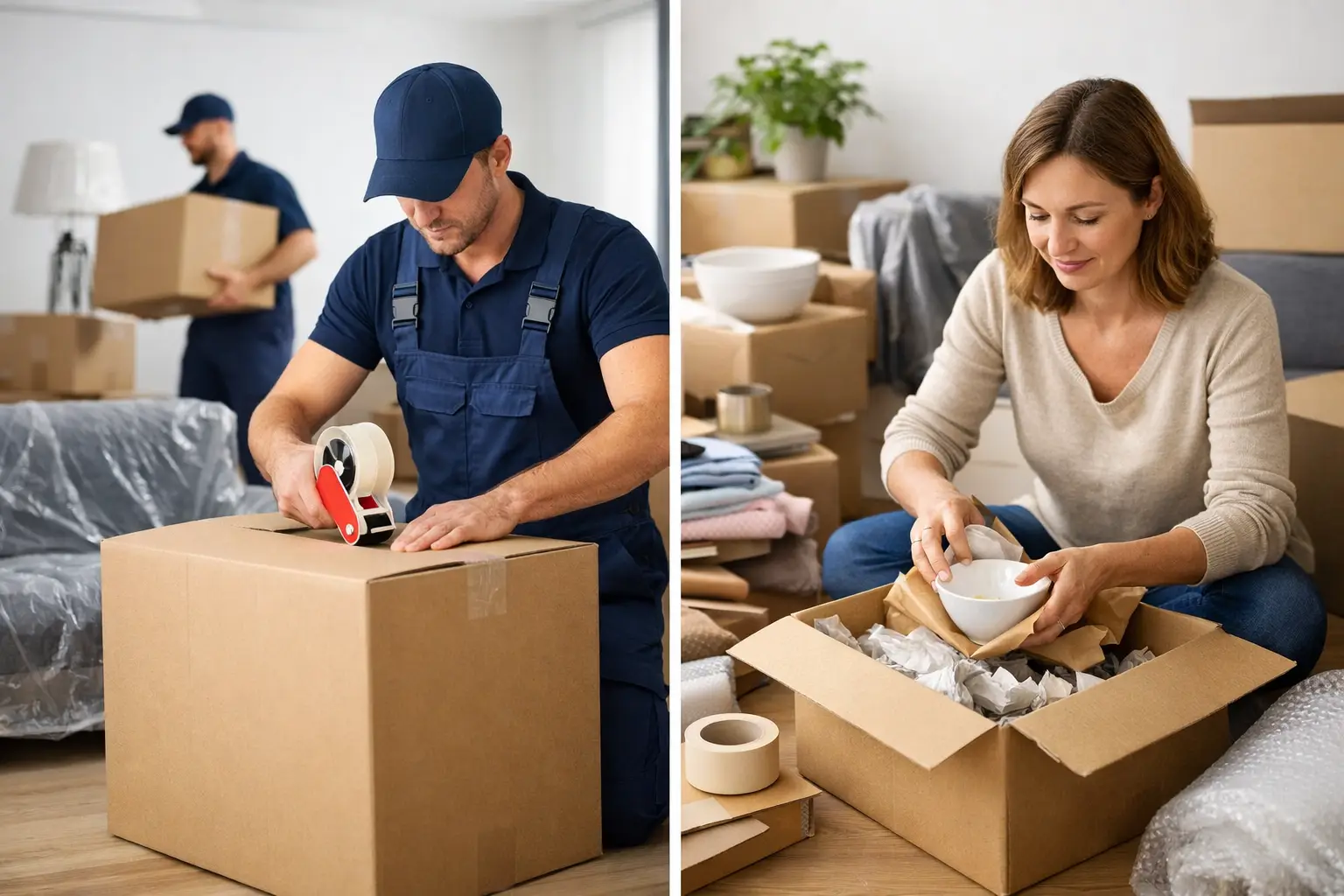
A move can look manageable until the boxes start taking over the spare room, the kitchen is still full the night before moving day, and nobody is quite sure how to protect the television. That is where the packing service vs self packing decision becomes more than a question of convenience. It affects your timeline, the safety of your belongings, and how much pressure you carry into moving day.
There is no single right choice for every household. Some people have the time, confidence, and budget discipline to pack themselves. Others are balancing work, children, settlement dates, an interstate move, or the emotional task of clearing a family home. The best option is the one that gives you enough control without creating unnecessary stress.
Packing Service vs Self Packing: The Real Difference
Self packing means you source boxes and materials, sort every room, wrap and label each item, and have everything ready before the removal crew arrives. You decide what gets packed, how it is packed, and when the work happens. It can reduce the upfront cost of your move, particularly when you have several weeks to prepare.
A professional packing service puts trained packers in your home before the move. They bring suitable materials, pack room by room, protect fragile pieces, label cartons, and prepare furniture and loose items for transport. Depending on the service you choose, they may also unpack at the new property, remove used packing materials, and help set up key rooms.
The difference is not simply who puts items in boxes. Professional packers work to a system. They know how to wrap glassware so it does not shift, how to protect artwork and mirrors, how to pack books without making cartons too heavy, and how to use space efficiently. That preparation can make loading, unloading, and finding essentials at the other end much easier.
When Self Packing Makes Sense
Self packing is a practical choice when your move is small, your schedule is flexible, and you are comfortable organizing the work yourself. A one-bedroom apartment, a local move with minimal fragile items, or a move where you have already started decluttering may be well suited to a DIY approach.
It also works well for people who prefer to make every decision themselves. You may want to sort paperwork privately, choose exactly what goes into each carton, or take your time deciding what to keep, donate, or discard. That control can be valuable, especially when you are downsizing.
The key is to be realistic about the workload. Packing a home nearly always takes longer than expected because it includes more than filling boxes. You need to buy materials, empty cupboards, wrap breakables, label cartons clearly, dismantle selected furniture, and keep enough daily essentials accessible until moving day.
Self packing is usually the better fit if you can answer yes to these questions:
- Do you have enough time to pack steadily rather than rush in the final days?
- Can you safely handle fragile, bulky, or awkward items?
- Do you have dry space to store packed cartons before the move?
- Are you prepared to source quality boxes, tape, paper, and protective wrapping?
Saving money on labor is worthwhile only if the process does not lead to damaged belongings, missed deadlines, or a move that leaves you exhausted before the truck arrives.
The common self-packing mistakes
Most packing problems come from rushing. Overfilled cartons split or become unsafe to lift. Underfilled cartons allow items to move around in transit. Poor labeling means essential items disappear among dozens of similar boxes. A box marked “kitchen” is less useful than one marked “kitchen – everyday plates and mugs.”
Fragile items need particular attention. Newspaper can leave marks on glass and china, while towels and clothing are not always enough protection for delicate pieces. Electronics should be packed with their cords labeled and secured separately. If you are keeping original boxes for a TV, computer, or appliance, use them. If not, use purpose-made cartons and sufficient padding.
When a Professional Packing Service Is Worth It
Professional packing is often worth the investment when time is limited or the contents of the home need extra care. Families moving from larger homes, professionals with demanding schedules, older clients, and people preparing a property for settlement can save days of work by having experienced packers take over.
It is also a strong option for difficult moves. Newcastle and the Hunter Region have their share of steep driveways, apartment access restrictions, waterfront properties, rural roads, and homes with multiple levels. When access is challenging, good packing helps the removal crew move items more safely and efficiently through tight spaces, stairs, or long carries.
A packing service can be especially helpful for high-value or fragile belongings, including artwork, mirrors, glassware, antiques, collectibles, and electronics. Professional crews use the right combination of wrapping, cartons, cushioning, and labeling rather than relying on whatever materials are available at home.
For deceased estate clearances, professional packing can offer much-needed structure during a difficult time. Family members can identify sentimental or important belongings while a respectful team manages the practical work of sorting, packing, and preparing items for removal. This does not remove the emotional decisions, but it can reduce the physical and logistical burden.
What professional packers typically handle
A full packing service generally covers the household contents that need to travel, from kitchen cupboards and wardrobes to bookshelves and decorative items. Furniture can be wrapped or protected, and selected pieces may be disassembled for safer transport. Cartons are labeled so unloading is more organized at the new address.
Before booking, clarify what is included in the quote. Ask whether packing materials are supplied, whether furniture disassembly and reassembly are included, and whether unpacking is available. It is also sensible to discuss items that need special care, such as pianos, large artwork, valuable collections, or sensitive office equipment.
Comparing Cost, Time, and Risk
Self packing usually costs less upfront because you are paying for materials rather than packing labor. However, the real comparison should include your time, the likelihood of buying too many or too few supplies, and the potential cost of replacing items that are not adequately protected.
Professional packing costs more because it includes skilled labor and materials. In return, it can reduce the number of days you spend preparing, improve protection for delicate items, and make the move more predictable. For many households, the value is not just in the boxes being packed. It is in arriving at moving day with the home ready, the essentials accounted for, and fewer last-minute jobs to manage.
Risk matters as well. Removal companies can handle professionally packed cartons with a clear understanding of how they were prepared and what protection was used. If you pack your own items, take care to use sturdy cartons, avoid prohibited or hazardous goods, and tell the removal team about anything unusually fragile or heavy.
A Hybrid Approach Can Be the Best Value
You do not have to choose an all-or-nothing option. Many people pack straightforward items themselves and bring in professionals for the rooms that consume the most time or carry the most risk.
For example, you might pack clothing, books, linen, and children’s toys, then have a packing team handle the kitchen, artwork, glassware, electronics, and large furniture. This approach preserves the cost savings of self packing while giving your most delicate belongings professional protection.
A partial pack is also useful when you have started well but run out of time. Rather than spending the final night wrapping plates and searching for boxes, you can have the remaining work completed properly before the move.
Choose Based on Your Actual Move, Not the Ideal One
The right choice depends on the size of your home, your available time, your physical capacity, and the type of belongings being moved. It also depends on what else is happening around the move. A job change, new baby, sale deadline, lease end date, or estate matter can turn a simple DIY task into an exhausting project.
If you choose self packing, start early, work room by room, and label every carton with both its destination room and a brief description of its contents. Keep medications, important documents, chargers, keys, toiletries, and a change of clothes in a clearly marked essentials box that travels with you.
If you choose professional help, ask for a clear quote and explain any access issues before the booking. A local, experienced team such as Atlantis Removals can assess the practical details of your property and recommend a full or partial packing service that suits the move rather than selling more than you need.
A well-packed home gives your move a calmer starting point. Whether you pack it yourself or hand the job to professionals, the goal is the same: your belongings arrive protected, your moving day stays on track, and you can begin settling into the new place with less to sort out.