


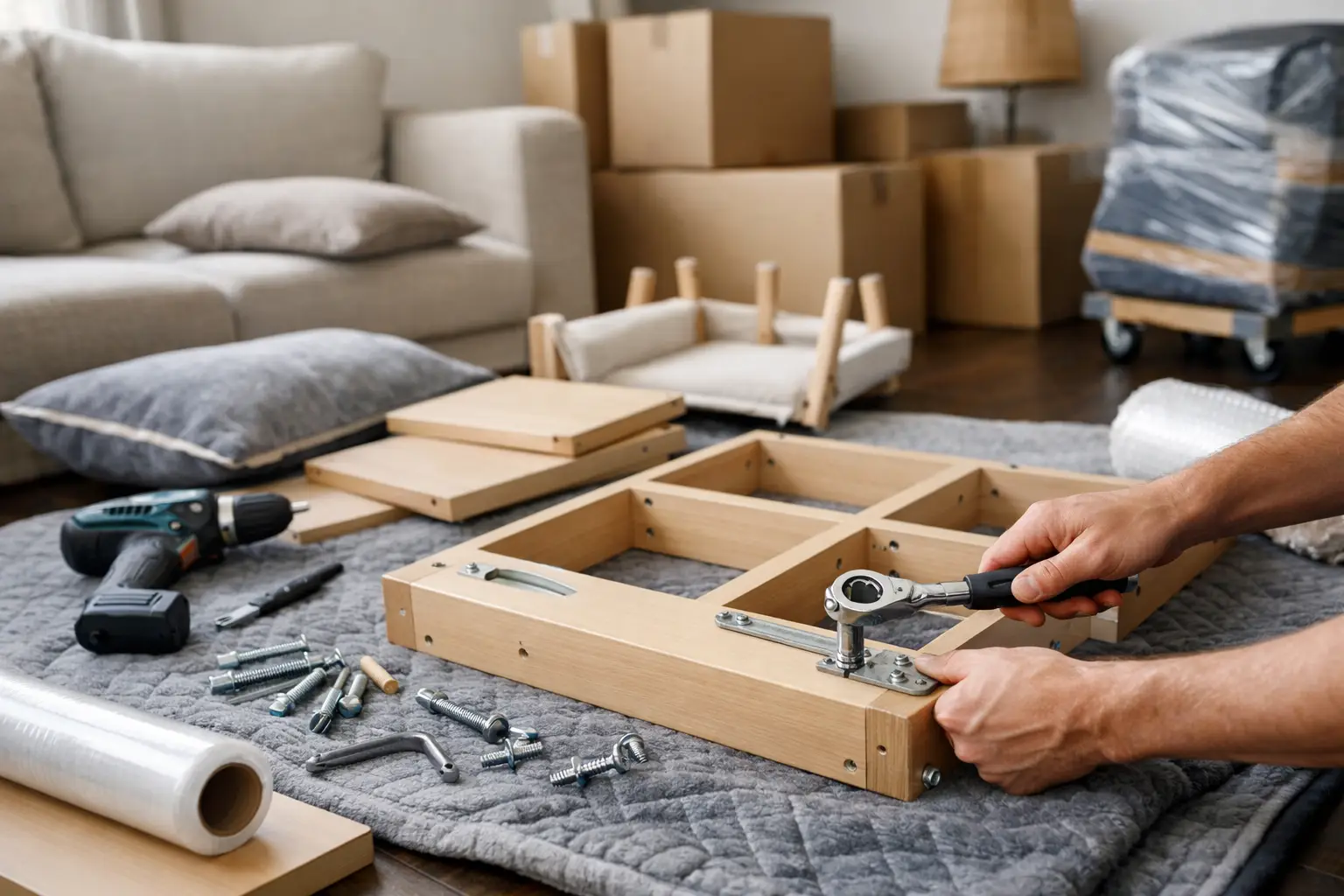
A sectional sofa that will not clear the doorway, a bed frame with missing bolts, or a heavy dining table that cannot make a tight stair turn can slow down an otherwise well-planned move. Furniture disassembly before moving is often the practical step that protects your belongings, your property, and the people carrying each item.
It is not necessary to take apart every piece of furniture. In fact, disassembling an item unnecessarily can create extra work and increase the risk of lost hardware. The right approach is to assess what needs to come apart, prepare it properly, and make sure it can be reassembled safely at the new address.
When Furniture Disassembly Before Moving Makes Sense
The biggest reason to disassemble furniture is access. A piece may fit comfortably in a room but still be too large for a hallway, elevator, apartment entrance, stairwell, or truck. Removing legs, doors, shelves, headboards, or detachable sections can reduce the size and weight of an item enough to move it safely.
Large modular lounges, bed frames, wardrobes, dining tables, desks, and entertainment units are common candidates. Furniture with glass panels, stone tops, or long unsupported sections also deserves extra attention. Breaking an item down into manageable components can help prevent strain, scratches, chipped corners, and damage to walls or door frames.
Disassembly is especially useful when moving from or into apartments, townhouses, waterfront homes, or properties with steep access. Across Newcastle and the Hunter Region, access can vary greatly from one home to the next. A careful assessment before moving day helps avoid last-minute surprises when a bulky item reaches a narrow landing or driveway.
Pieces That Are Often Better Left Assembled
Some furniture is stronger and safer when it stays together. Solid timber chests, compact side tables, small bookcases, and well-built drawers may travel best as complete pieces when they can clear the access route. Taking apart older furniture, glued joints, or items with worn fittings can cause more harm than good.
Flat-pack furniture is another judgment call. If it has been assembled and moved several times, the particleboard, cam locks, and screw holes may no longer be as secure as they once were. It may still need to be disassembled for access, but it should be handled carefully and reassembled only where the fittings remain sound.
Plan the Work Before Moving Day
Good preparation turns furniture disassembly from a stressful task into a controlled part of the move. Start by measuring the largest items and comparing those measurements with doorways, hallways, elevators, staircases, and turns at both properties. Do not forget to account for handrails, light fittings, low ceilings, and parked vehicles that may affect access.
Check manufacturer instructions where available, particularly for adjustable beds, reclining lounges, wall units, and desks with cable management. Take clear photos before removing any parts. Photos of the back, underside, hardware locations, and cable connections can save a great deal of time when you are setting up your new home.
For furniture you plan to disassemble yourself, keep the process organized:
- Empty drawers, cabinets, and storage compartments before lifting or taking anything apart.
- Place screws, bolts, washers, and brackets from each item in a labeled bag.
- Tape the labeled bag securely to a protected part of the matching furniture, not to a polished or delicate surface.
- Wrap removable legs, glass shelves, and vulnerable edges separately to prevent rubbing during transport.
- Keep essential tools, instructions, and a marker in one clearly labeled box that travels with you.
Avoid placing loose hardware in a general toolbox or kitchen drawer. A single missing connector can make a bed, desk, or wardrobe unusable when you need it most.
Protect Each Piece During Disassembly
Taking furniture apart is only half the job. Each component still needs protection for loading, transport, and unloading. Tabletops can flex if they are carried without support. Bed rails can become scratched or bent. Doors and drawers can swing open if they are not secured correctly.
Remove glass shelves and panels whenever practical, then wrap and label them individually. Protect corners with padded coverings and keep timber surfaces separated from metal hardware. If a dining table has detachable legs, wrap the legs as a bundle but avoid placing them directly against the tabletop.
For electronics and office furniture, photograph cable connections before unplugging anything. Label power cords, monitor arms, keyboard trays, and desk components so they return to the right workstation. This is particularly helpful for office moves, where a missing bracket or cable can delay a staff member from getting back to work.
It also helps to think beyond the item itself. Heavy furniture should be lifted with the right equipment and enough people, even after it has been disassembled. Removing a bed headboard does not make a large mattress easy to maneuver, and removing table legs does not make a stone tabletop safe to carry without proper support.
Avoid These Common Moving-Day Problems
The most common mistake is deciding to disassemble furniture after the truck has arrived and the move is already underway. This can add significant time, create avoidable pressure, and leave you searching for tools or packaging at the last minute. Identify difficult pieces during the quote or walkthrough stage instead.
Another issue is over-tightening screws during reassembly. This can strip threads, crack flat-pack panels, or damage timber. Tighten fittings securely, but do not force them. If hardware no longer grips properly, the item may require replacement fittings or professional repair before it is safe to use.
Be cautious with furniture that includes gas struts, electrical components, built-in lighting, or complex reclining mechanisms. These items may require specific handling instructions. Forcing a mechanism apart can damage it or create a safety risk.
Finally, do not rely on tape alone to hold structural parts together. Tape is useful for securing protective materials and keeping drawers closed, but it is not a substitute for bolts, brackets, or proper lifting methods.
When Professional Disassembly Is Worth It
Professional help is often worthwhile for heavy, valuable, awkward, or complex furniture. An experienced moving crew can assess access, use the right tools, protect components, and keep hardware paired with the correct item. This reduces the chance of damage and avoids the frustration of arriving at your new property with furniture that cannot be rebuilt.
It can also make the rest of the move more efficient. When a crew knows in advance that a king bed, large wardrobe, modular sofa, or office workstation needs to come apart, they can plan the loading order and time required. That means fewer delays and clearer expectations on moving day.
Atlantis Removals can coordinate furniture disassembly and reassembly as part of a full moving service, helping households and businesses manage bulky items with care. This is particularly useful when access is limited, when time matters, or when you would rather focus on settling into the new space.
Before booking, be clear about which items need attention and share photos or measurements if possible. Mention any stairs, elevators, tight entries, fragile finishes, or special mechanisms. The more accurate the information, the better the moving plan can be.
A well-handled move is not about taking everything apart. It is about making sensible decisions before the lifting starts, protecting the pieces that matter, and ensuring your furniture arrives ready for its next room.