


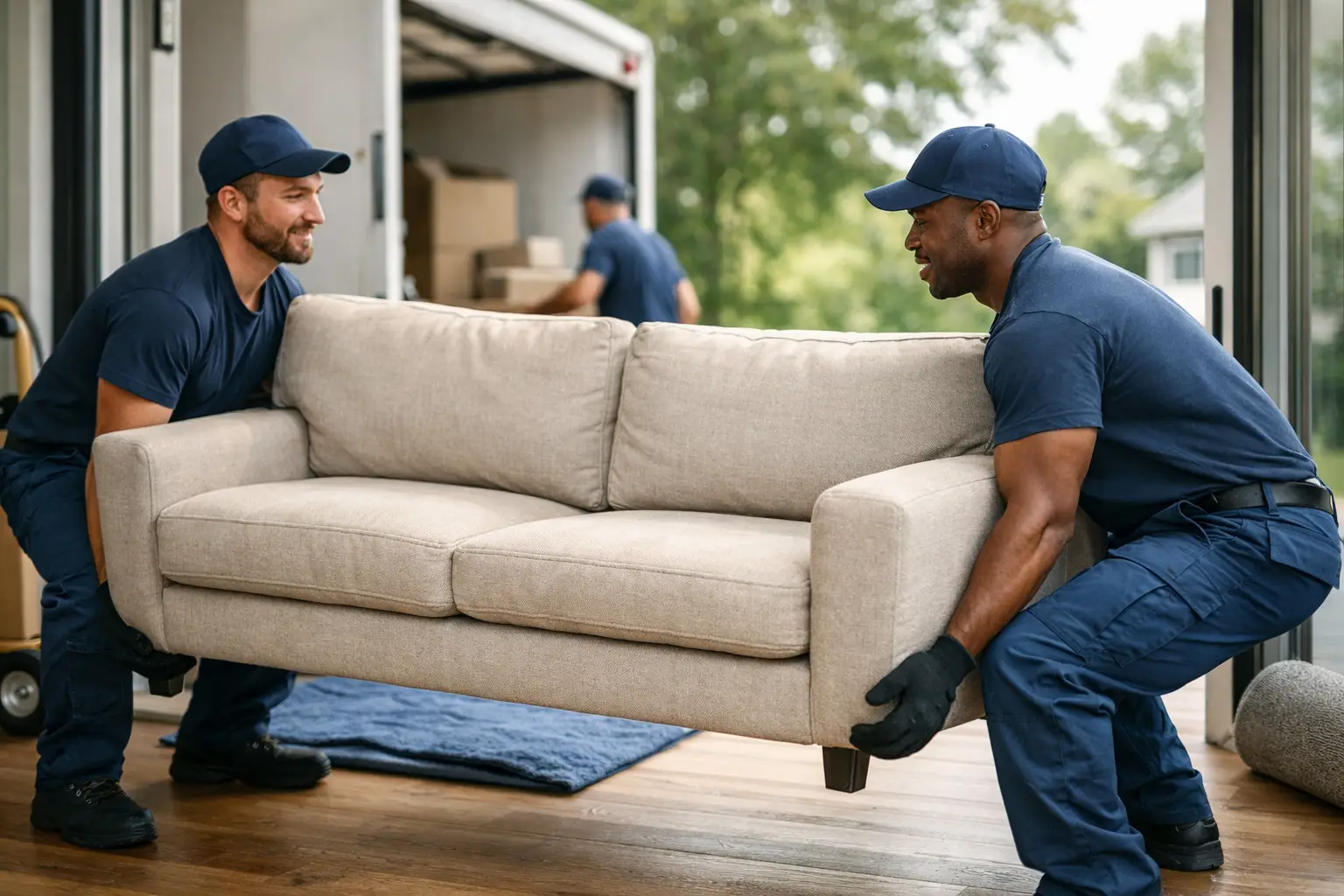
A sofa that barely clears the hallway, a solid timber dining table, or a refrigerator that needs to come down a narrow staircase can change the whole moving plan. Moving house with heavy furniture is not simply a matter of having a few extra hands available. It requires a clear path, the right equipment, careful lifting, and decisions that protect both people and property.
For many households, the heaviest items are also the most valuable or most used. They are often awkward to grip, difficult to maneuver, and unforgiving when a corner is misjudged. A little preparation can prevent damaged walls, strained backs, broken furniture, and a stressful delay on moving day.
Plan the route before moving heavy furniture
The route from each room to the moving truck matters as much as the furniture itself. Measure large pieces, then measure doorways, hallways, stairwells, elevators, gates, and any tight turns. Do not rely on a quick visual estimate. A few inches can decide whether an item fits flat, needs to be angled, or must be partly disassembled.
Walk the route with the furniture in mind. Look for low light fixtures, loose rugs, uneven paving, steep driveways, wet surfaces, and parked vehicles that reduce access. In Newcastle and the wider Hunter Region, this can be particularly relevant for older homes with narrow entries, apartment buildings with booking requirements, waterfront properties, and homes reached by sloping driveways.
If an item will not safely clear the opening, stop and reassess before attempting to force it through. Removing doors from hinges, taking off sofa legs, or separating a bed frame may create the clearance needed. In other cases, a window or balcony lift may be the safer option, but this should be assessed by experienced movers rather than attempted casually.
Measure more than the furniture
A furniture item can fit through a doorway but still become stuck on the turn immediately after it. Account for the item’s height, width, depth, and diagonal measurement, especially for tall cabinets, sectional sofas, and refrigerators. Also consider the space needed for the people carrying it. Two movers need room to communicate, adjust their grip, and step safely.
Prepare each piece for safe handling
Heavy furniture should be emptied before it is moved. Drawers full of books, dishes, or clothing add weight and can shift unexpectedly. Remove shelves, glass panels, detachable cushions, and other loose components where practical. Keep screws, brackets, and small parts in labeled bags taped securely to the relevant item or packed in a clearly marked box.
Protecting furniture is not only about avoiding scratches. Moving blankets, padded covers, and plastic wrap help keep doors and drawers closed, prevent fabric from catching, and reduce damage when items need to be set down temporarily. Cardboard corner protectors can be useful for timber tables and cabinets.
Floors, walls, and door frames need protection too. Cover vulnerable flooring and use doorway protectors where large pieces are likely to brush past. This is especially worthwhile in rental properties, newly renovated homes, and shared apartment corridors where any damage can become an expensive issue.
Use the right equipment, not just more effort
A team of strong people without the right equipment can still be at risk. Furniture dollies, hand trucks, shoulder straps, lifting slings, ramps, and padded moving blankets all have a role, but only when used correctly.
A four-wheel furniture dolly can make moving a large cabinet across level flooring much easier. A hand truck is useful for appliances and tall, stable items. Straps may help distribute weight, but they do not make an oversized piece safe on stairs or around a blind corner. Equipment reduces strain and improves control. It does not replace sound judgment.
Avoid dragging heavy furniture across hard floors or carpet. It can damage flooring, stress furniture joints, and make the item difficult to control. Furniture sliders can help with short movements inside a room, but they are not a substitute for safely lifting and carrying an item through the home.
Lift as a team and communicate clearly
Before anyone lifts, agree on the route, resting points, and commands. One person should lead the movement, calling out turns, steps, and stops. Simple instructions such as “lift,” “walk,” “stop,” and “lower” prevent confusion when visibility is limited.
Keep the load close to the body, lift through the legs rather than the back, and avoid twisting while carrying weight. If a piece starts to slip or the route becomes unstable, set it down safely. Trying to recover a falling cabinet or appliance is how injuries happen.
Stairs deserve extra caution. The person walking backward down a staircase cannot always see their footing, while the person below carries a greater share of the weight. This is one of the clearest situations where professional help is usually worth considering, particularly for large appliances, pianos, solid wood furniture, or oversized modular lounges.
Know which items need professional movers
Some furniture is heavy but manageable with preparation and a capable team. Other pieces carry enough risk that a professional crew is the sensible choice. This is not just about the item’s weight. Its shape, value, fragility, and access conditions all matter.
Professional movers are especially helpful for:
- Refrigerators, washers, dryers, and large appliances
- Pianos, pool tables, safes, and other exceptionally heavy items
- Large solid timber wardrobes, sideboards, and dining tables
- Furniture that must travel up or down stairs, through tight hallways, or across steep access points
- Valuable antiques, glass-front cabinets, and items with sentimental value
Experienced crews can assess access before the move, bring appropriate equipment, and use proven loading methods to keep furniture stable in transit. They can also disassemble and reassemble suitable items, which often saves time and reduces the chance of damage.
Insurance coverage is another consideration. A professional moving service should clearly explain what is covered, what preparation is required, and whether particular high-value items need to be declared in advance. Clear information is more useful than vague promises when you are trusting someone with the heaviest pieces in your home.
Load heavy furniture with the destination in mind
The moving truck should be loaded deliberately, not filled in the order items reach the driveway. Heavy, sturdy pieces generally go in first and are positioned to create a stable base. Mattresses, padded blankets, and lighter boxes can then be used to protect surfaces and fill gaps.
Weight should be distributed evenly across the truck. A poorly balanced load can shift during braking or turns, putting furniture and the vehicle at risk. Nothing should be left unsecured. Tie-downs, padding, and careful stacking prevent movement that can damage drawers, legs, and corners during transport.
Think ahead to unloading as well. If the new home has a difficult staircase or an upstairs bedroom, tell the moving crew before loading begins. The order of the truck can then support a more efficient unload, rather than requiring heavy items to be moved around twice.
Give yourself time for the difficult pieces
Heavy furniture rarely responds well to a rushed schedule. Allow extra time for disassembly, building access, elevator reservations, driveway positioning, and unexpected tight spots. If you are moving from or into an apartment, confirm parking arrangements and loading-zone rules with the building manager ahead of time.
A full-service team such as Atlantis Removals can handle packing support, furniture disassembly, transport, and reassembly when the job calls for it. For households balancing work, children, settlement times, or a long-distance move, that support can turn a physically demanding task into a more controlled process.
The safest move is usually the one that respects the limits of the furniture, the property, and the people doing the lifting. When a piece feels too heavy, too awkward, or too risky for the access available, choosing experienced help is a practical decision that protects what matters most.