


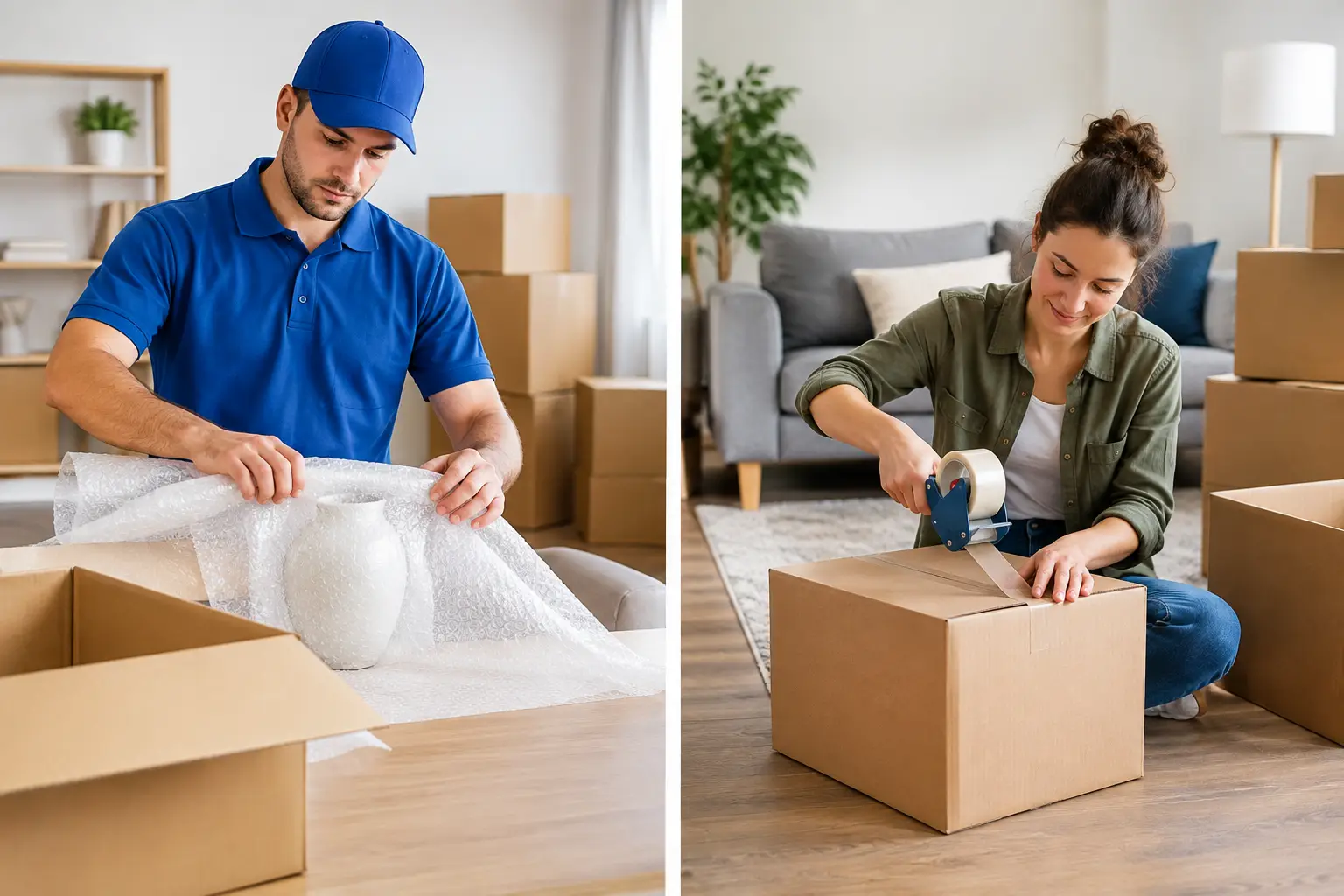
A half-packed kitchen at 9 p.m. can make a move feel much bigger than it looked on the calendar. The packing service versus DIY decision often comes down to more than budget. It affects how long your move takes, how well fragile belongings are protected, and whether moving week feels manageable or exhausting.
There is no single right answer for every household or business. Packing your own belongings can save money and give you control over every box. Professional packing can remove a major workload and bring proven methods to items that are awkward, valuable, or difficult to protect. The best choice depends on your timeline, the property, and the amount of help you genuinely need.
Packing Service Versus DIY: What Are You Really Comparing?
DIY packing means sourcing boxes and materials, sorting belongings, wrapping items, labeling cartons, and preparing everything before moving day. It can be a practical approach for a smaller apartment, a local move with plenty of lead time, or a household that has already reduced what it owns.
A professional packing service provides trained packers, suitable materials, and an organized process before the truck arrives. Rather than spending evenings wrapping glassware and dismantling your routine room by room, you hand that work to a crew that packs for safe transport and efficient loading.
The difference is not simply who puts items in boxes. It is the difference between using your personal time to prepare for the move and paying for experienced support to handle that preparation. For many families, that becomes especially valuable when work, children, settlement dates, or access arrangements are already competing for attention.
When DIY Packing Makes Sense
DIY is often a sound choice when your move is straightforward and you can begin early. If you are moving from a lightly furnished rental, have several weeks to prepare, and are comfortable handling the work, packing yourself may keep upfront costs lower.
It also gives you close control over personal items. Some people prefer to pack jewelry, important documents, medications, photographs, and sentimental keepsakes themselves, even when they use professionals for the rest of the home. That is a sensible middle ground.
DIY works best when you have a realistic plan. Packing a three-bedroom home usually takes longer than expected because the volume hides in cupboards, linen closets, garages, and kitchen drawers. Start with rooms you use least, then leave daily essentials until the final days. Clear labels on at least two sides of every box will make unloading far easier.
The common mistake is treating packing as a last-minute task. Weak boxes, unlabeled cartons, and hurried wrapping may cost less at first, but they can add delays, breakages, and frustration on moving day. DIY is most effective when it is organized, not when it is rushed.
What a Professional Packing Service Can Change
Professional packers bring materials and techniques that are hard to replicate with leftover cartons and a few rolls of tape. They know how to protect dishes, glassware, artwork, lamps, electronics, mirrors, and other items that need more than a blanket over the top.
They also pack with transport in mind. Cartons need to be the right weight, contents need to be secure, and fragile items need clear identification. Properly packed boxes stack more safely in the truck and are quicker to place in the right rooms at the new address.
For larger homes, professional packing can recover days of personal time. Instead of working through every weekend before a move, you can focus on changing utilities, arranging keys, updating addresses, and preparing children or pets for the transition. This is often the real value of the service: not only faster packing, but fewer competing tasks for you to manage.
A full-service option can also include unpacking, furniture disassembly and reassembly, and delivery of moving supplies. That level of support is useful when settling in quickly matters, such as a short overlap between properties or an office move that needs to minimize downtime.
Cost Is More Than the Packing Quote
DIY packing is usually less expensive in direct dollars, but it is not free. Boxes, tape, paper, bubble wrap, mattress covers, and specialty cartons add up. So does the cost of taking time off work, ordering extra supplies after underestimating the volume, or replacing items damaged because they were not packed securely.
A packing service adds a clear labor and materials cost, which may be worthwhile if it prevents delays or reduces pressure at a demanding time. The right comparison is not simply the price of packing versus no price. Consider what your time is worth, how much preparation remains, and the consequence of being unready when the movers arrive.
Ask for a clear quote that explains the scope of work. A useful quote should distinguish between full-home packing, selected-room packing, fragile-only packing, materials, and any unpacking requested. Clear communication helps you choose the level of service that fits your budget without paying for support you do not need.
The Best Middle Ground Is Often a Hybrid Move
Many moves do not need an all-or-nothing choice. A hybrid approach lets you pack straightforward belongings while professionals handle the items that take the most skill or time. You might pack clothing, books, toys, towels, and pantry items yourself, then arrange professional packing for the kitchen, artwork, fragile décor, and large or delicate pieces.
This approach is particularly useful for homes with a few high-risk areas rather than a large amount of clutter. Kitchens are a frequent example. Glassware, ceramics, appliances, and oddly shaped items can take hours to wrap properly. Having that room professionally packed can remove a major source of moving-day worry while keeping the overall service focused.
Business moves can benefit from the same principle. Staff may pack personal desk items and clearly labeled files, while a trained crew manages workstations, monitors, archive boxes, and equipment that requires careful handling. Planning the division of work in advance protects productivity and helps the move stay on schedule.
Consider Your Property and Access
The practical details of a property can shift the decision. An apartment with limited elevator bookings, narrow hallways, or strict loading times leaves little room for packing delays. A waterfront home, steep driveway, rural access road, or multi-level house can also make a well-prepared move more important.
In Newcastle, Lake Macquarie, and the wider Hunter Region, local access knowledge can make a meaningful difference. A team familiar with apartment buildings, driveway constraints, and regional routes can help plan the right truck access and timing before moving day.
Professional packing is often the safer option when access is tight because it helps ensure the home is ready when the crew arrives. That does not mean DIY is unsuitable. It means you should allow extra time and avoid leaving key rooms unfinished when loading windows are fixed.
Questions to Ask Before You Decide
Before choosing a packing service or DIY approach, be honest about four areas:
- How many uninterrupted hours can you dedicate to packing before moving day?
- Which belongings would be difficult, expensive, or upsetting to replace if damaged?
- Are there fixed deadlines such as settlement, lease handover, elevator access, or business reopening?
- Would professional help reduce a workload that is already stretching your household or team?
If the answers point to a tight schedule, fragile possessions, or a complex property, professional packing deserves serious consideration. If you have time, a smaller load, and a clear plan, DIY may be the better value. There is also nothing wrong with choosing help only where it makes the biggest difference.
Pack for the Move You Actually Have
The right packing choice should make the rest of your move easier, not add another complicated decision. Atlantis Removals can tailor packing support around the parts of the job that need professional care, from a few fragile rooms to a full household or office pack.
Give yourself permission to be practical. Keep personal essentials close, start early if you are packing yourself, and bring in experienced help when time, safety, or peace of mind calls for it. A move goes better when the packing plan reflects your real life, not an idealized version of it.