


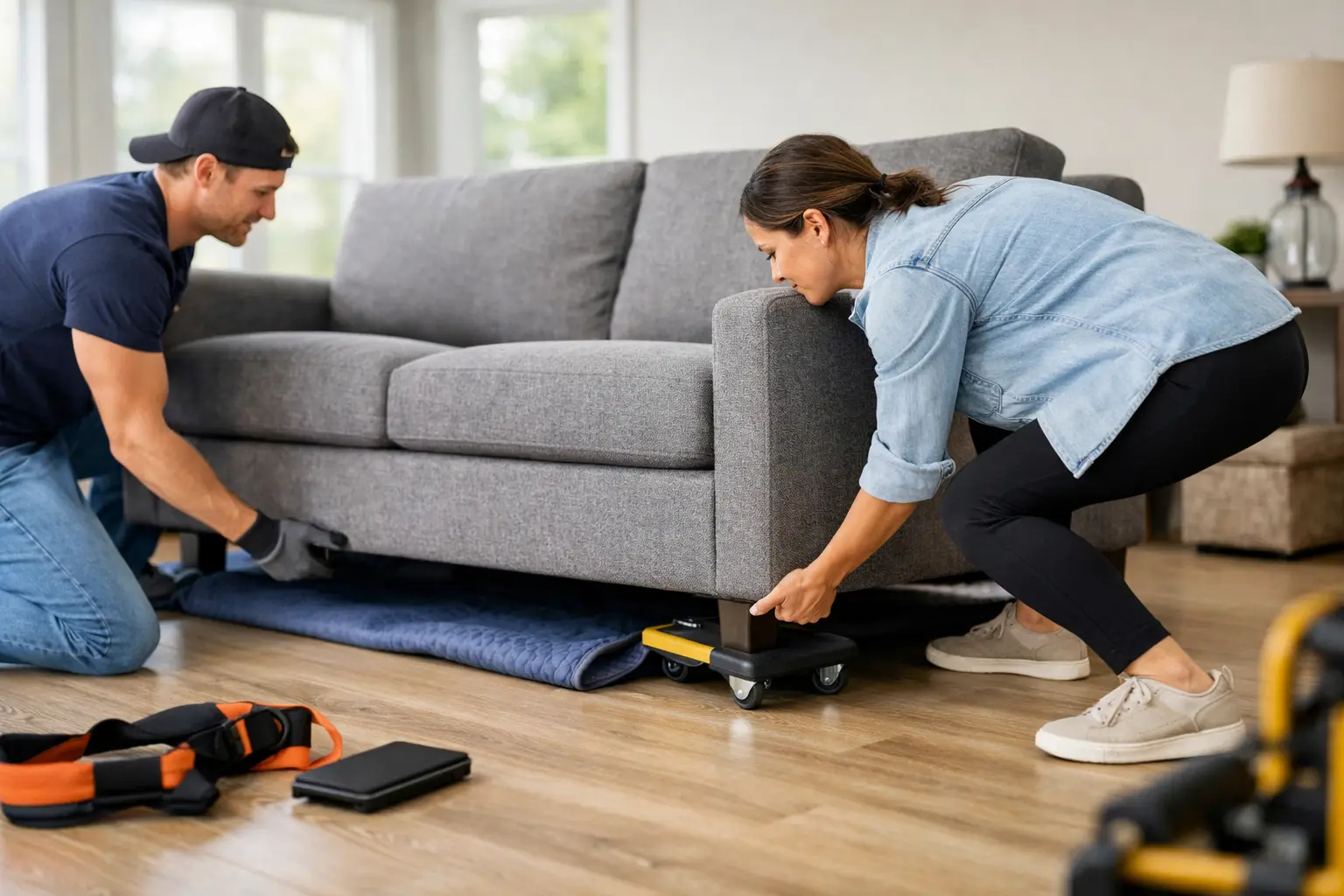
A sofa wedged in a doorway, a solid wood dresser at the top of the stairs, or a refrigerator that needs to clear a tight kitchen corner can turn moving day into a real safety risk. Knowing how to move heavy furniture is not about brute strength. It is about planning the route, using the right equipment, and knowing when a piece is too heavy or awkward to handle without professional help.
Most furniture damage and moving injuries happen when people rush, lift from the wrong position, or try to manage a large item alone. A few careful decisions before you start can protect your back, your walls, and the furniture you want to keep.
Assess the Furniture Before You Lift
Start by looking at the item itself. Estimate its weight, identify where it is heaviest, and check whether anything can be removed. Drawers, shelves, cushions, detachable legs, glass panels, and hardware can make a major difference. Emptying a dresser is essential, but removing the drawers can also reduce weight and stop them from sliding open during the move.
Think about more than the item’s overall weight. A tall bookcase may be lighter than a low cabinet but harder to control because its weight sits higher. A recliner can be awkward because of moving mechanisms underneath. Stone tops, mirrors, and glass-fronted cabinets require extra care even when they are not particularly heavy.
Do not attempt a solo move if the furniture is difficult to grip, too wide for the space, unbalanced, or likely to block your vision. These are common signs that a second person, moving equipment, or an experienced crew is needed.
Plan the Route From Start to Finish
The shortest route is not always the safest one. Walk the full path before lifting anything, from the room to the truck or final location. Measure doorways, hallways, stair landings, elevators, and turns, then compare those measurements with the furniture.
Clear loose rugs, toys, shoes, pet bowls, cords, and boxes from the route. Open doors fully where possible, and secure them so they do not swing back into the path. If the move involves stairs, make sure the steps are dry and well lit.
It also helps to decide in advance where each person will stand. One person should be responsible for calling directions, especially around corners, stairs, or narrow entries. Clear communication prevents the sudden pivots and uneven lifts that cause strains and damaged walls.
When moving through an apartment building, confirm elevator access and any booking requirements before moving day. For homes with steep driveways, narrow gates, or uneven outdoor paths, allow more time and use equipment suited to the surface.
Use Equipment That Reduces the Load
The right moving tools do more than make the job easier. They reduce the amount of lifting required and help keep heavy pieces stable. For large or valuable furniture, basic equipment is usually worth having on hand.
- Furniture sliders help heavy items move across carpet, tile, vinyl, or timber floors without dragging.
- A hand truck or appliance dolly supports tall, heavy items such as refrigerators, filing cabinets, and large cabinets.
- Moving straps shift part of the load to stronger muscle groups when used correctly by two people.
- Furniture blankets protect corners, finishes, door frames, and walls from impact.
- Ratchet straps or tie-downs secure furniture inside the truck so it cannot shift in transit.
Choose sliders designed for your flooring. Hard plastic sliders work well on carpet, while felt or padded sliders are better for hard floors. Never drag furniture directly across hardwood, tile, or laminate, as even a small amount of grit underneath can leave deep scratches.
A dolly is helpful, but it is not a substitute for control. Secure the item to the dolly before moving it, keep the load balanced, and move slowly over thresholds. Appliances should remain upright whenever possible. If an appliance must be tilted, check the manufacturer’s guidance before plugging it in at the new location.
How to Move Heavy Furniture With Safe Lifting Technique
When lifting is unavoidable, use your legs rather than your back. Stand close to the furniture with your feet about shoulder-width apart. Bend at your knees and hips, keep your back as straight as possible, and grip a solid point on the item. Lift smoothly by pushing through your legs.
Avoid twisting while carrying. If you need to change direction, take small steps and turn your feet rather than rotating your upper body while holding weight. Keep the item close to your body. The farther it is held away from you, the more strain it places on your back and shoulders.
Move as a Team
For a two-person lift, agree on the plan before either person picks up the load. Decide who is walking forward, who is walking backward, and which end is taking more weight. The person moving backward has less visibility, so the person facing forward should call out hazards and guide the pace.
Use simple commands such as “lift,” “stop,” “down,” and “turn.” If either person loses their grip or feels pain, set the furniture down safely. Trying to save an awkward lift in the middle of a staircase can quickly turn a manageable problem into an injury.
Carry Less Whenever You Can
Sliding, rolling, and using a dolly are usually safer than carrying. For example, place sliders under each corner of a dresser and guide it slowly across the room. For a couch, remove the legs if possible, wrap it in a moving blanket, and use a furniture dolly or shoulder straps only when the route is clear.
The goal is not to prove you can lift the item. The goal is to get it from one place to another without hurting anyone or damaging your property.
Handle Different Furniture Types Carefully
Large sofas are bulky and can be difficult to maneuver through doorways. Remove cushions and legs first, then protect the arms and corners with moving blankets. If the sofa will not fit through an opening upright, it may need to be moved on its end or carefully angled. Do not force it through a tight doorway, as this can damage the frame, trim, or upholstery.
Dressers, sideboards, and cabinets should be emptied completely. Remove drawers and wrap them separately where practical. Do not use drawer pulls as lifting handles. They are not designed to carry the item’s full weight and may break away.
Bed frames are much easier to move once disassembled. Keep bolts, screws, and brackets together in a labeled bag, and tape the bag to a clearly marked frame component. Take a quick photo before disassembly if the frame has complex hardware.
Glass tables, mirrors, and display cabinets need special attention. Remove glass components where possible and carry them vertically, not flat. Wrap edges thoroughly and keep glass away from heavier items in the truck.
Protect Your Home as Well as Your Furniture
Heavy furniture can cause more damage to a home than people expect. Protect high-contact areas before moving begins. Use blankets or cardboard around door frames, banisters, and tight corners. Cover vulnerable floors and secure the protective material so it cannot become a trip hazard.
Take your time at thresholds and transitions between surfaces. A small lip at a doorway can catch a dolly wheel, while a wet outdoor path can make a heavy load unstable. If rain is expected, cover furniture before it leaves the house and make sure the loading route is as dry as possible.
Once furniture is inside the truck, place the heaviest pieces toward the front and along the walls. Keep weight low, distribute it evenly, and secure each large item with straps. A well-packed truck protects furniture from shifting and makes unloading safer.
Know When to Call a Professional Crew
Some items are not worth the risk of a DIY move. Large safes, pianos, oversized wardrobes, stone dining tables, commercial filing cabinets, and furniture on difficult staircases often require specialized equipment and experienced handling. The same applies when timing is tight, access is limited, or there is no reliable second lifter available.
A professional moving crew can disassemble and reassemble furniture, protect fragile pieces, manage difficult access, and secure everything properly in transit. For households and businesses, that support can prevent costly damage and reduce the physical pressure of moving day. Atlantis Removals provides insured, careful furniture handling for moves where safety, access, and time matter.
If a piece feels beyond your control, stop before the lift begins. Getting experienced help is a practical decision that keeps your move moving forward and lets you settle into the new space without an avoidable injury.